Showing posts with label Recipes. Show all posts

Wednesday, December 21, 2016

Colored Sugar - a sophisticated palette for a childhood favorite


The lack of artificial anything is usually one of the things I like most about life in Greece. But around the holidays I miss the technicolor sparkle. Cookies cut into shapes and strewn with bright sugars may not be the most sophisticated holiday offering, but they are our favorite. We used to put some dough aside for the girls to knead and roll until it was a gray mass of filth and delight all the bright green sugar in the world couldn't hide. 

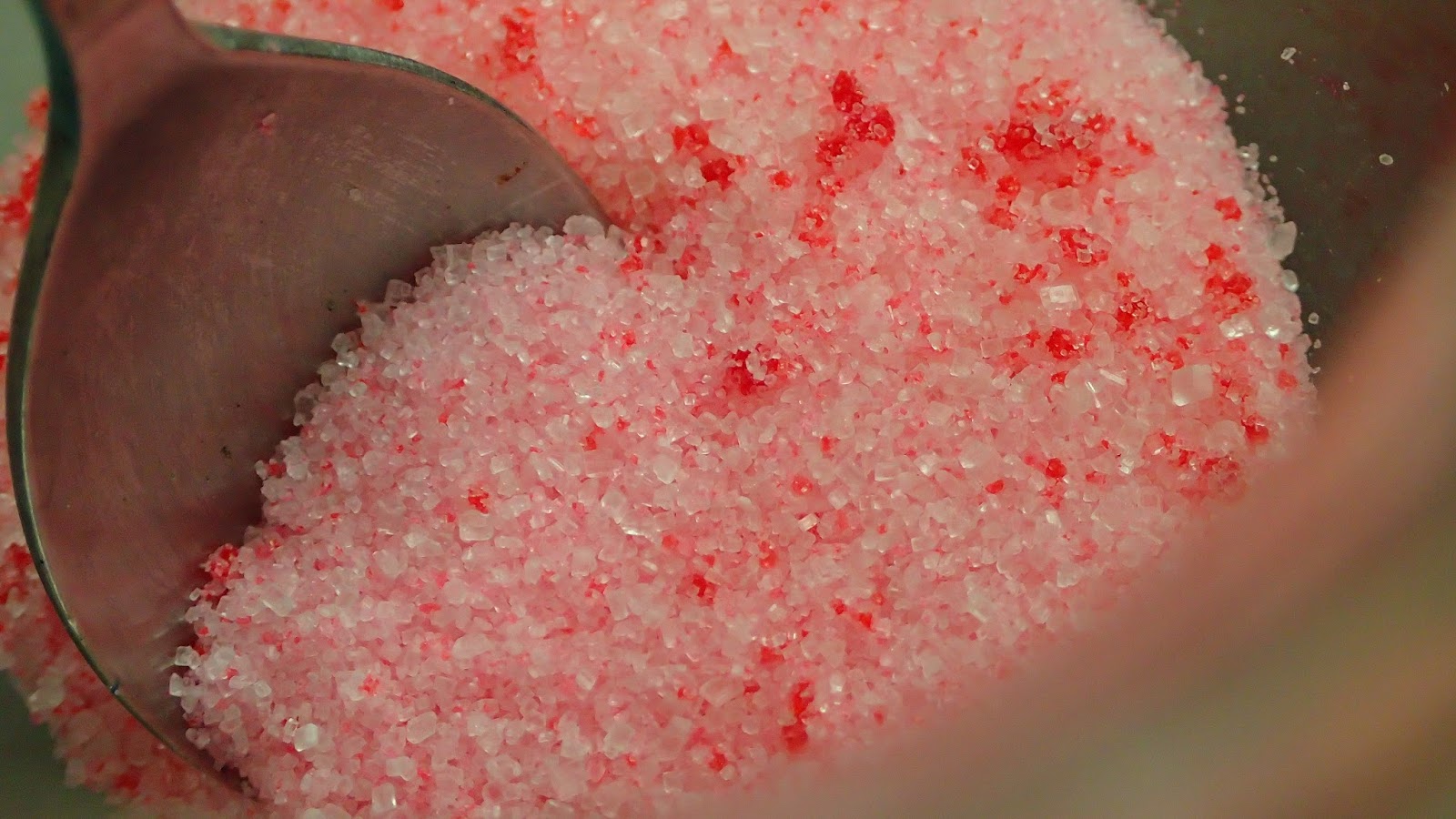
Our stock reduced to only bright yellow and baby blue, I looked on the internet to see how ridiculously easy it is to make your own sugars. All we needed were simple food colorings now available at the supermarket, plain white sugar, and coarse demerara sugar.

1.Round up a few jars with tight fitting lids
2. Start with about about a 1/4 of a cup of sugar, and add a drop or to of the color you want, and shake madly. If you are using paste colors, you may need to mash them in with a spoon.
3. The colored sugar will be like damp sand- spread it out in a dish. It will crisp up and stick to the dish after about a half an hour. Loosen it with your fingers and break up the lumps and put it in a jar.


That's the basics. But we came up with fabulous colors! The golden color of the demarara sugar makes for muted, sophisticated shades. 

"Green" became Moss- That was 5 drops of green in 1/2 C demerara. For true green, to 1/2 C demarara add 5 drops green and one of blue to counteract the natural gold of the sugar.

"Red" became a deep Salmon- 4 drops red in 1/2 C demarara. Adding 1 drop of blue made not a true red but a chic bordeaux.

For a deep Aqua do the reverse- 4 blue and a green.

The pure white granulated sugars produce clear jewel tones- candy cotton pink, blue like a tiffany's box (again, with a whisper of green)

For sanding sugars with some depth, we blended shades, mixing the finer crystals with the coarser.


Sprinkle them right onto the cookies before they go into the oven, or onto white icing while it is still just sticky enough for the sugar to cling to it (too damp, and the colors will bleed).

A half hour of play and a couple of Euros have never had a more sparkling result. 

More Holiday color:


Rainbow stripe cookies taste like Little Italy
Read More »

Tuesday, August 2, 2016

A Five-Minute Frozen Chocolate Wafer to Enjoy Summer Better


It's too hot to spend much time in the kitchen, but summer is for pleasure. Just three minutes with a mixer and you will have two sleeves of black rich chocolate dough for the freezer. Then, whenever you want something nice, slice off some wafers, thin as you like, turn on the oven, and go water the plants or something. It's a maximum return for minimum effort:

We will need:

250 g/ 1 C butter
1/2 tsp. salt
250 g / 1 1/4 C sugar
125 g/ 4 1/2 oz. melted semi-sweet chocolate
1 egg
70 g/scant 1 C cocoa powder
300 g/ 2 1/2 C flour
coarse grained raw sugar is you have it, for rolling the logs in.


Beat the softened butter, salt, sugar, and melted chocolate together. Add the cocoa powder and the egg, and when that is smooth, blend int he flour with a spoon so the dough does not toughen.

Divide in two, and make logs as fat and short or as long and thin as you like. I do one of each- small for tea time, large for constructing desserts.

Roll the log in coarse sugar if you have any, or chopped nuts, or chopped chocolate, or anything you like or nothing at all, wrap in plastic, and store in the freezer. when you are ready to have some, turn the oven on to 170 C/ 350 F, line  baking sheet with non-stick paper, and slice as thinly as you like. Put them on paper with just a little room between them.


Bake 10 - 12  minutes- they will look dry, but you can press your finger into them- they will crisp as they cool.


Great with cherries.
Read More »

Tuesday, July 26, 2016

Cream Cheese Semifreddo


This festive dessert takes about as long to make as an omelette. Make it next time you have leftover egg whites, and keep it in the freezer. It's very flexible- ours is vanilla, but you could add anything- espresso, almonds, chocolate swirl, fruit...

Most semifreddo tortes have a crust- this no exception- but we won't use the blender to crush the cookies, or an oven to bake the crust. We'll just line a pan with paper and crush some cookies in by hand, spreading them around evenly-


This is 8 chocolae covered digestive biscuits, because that's just what we happened to have around.

For the torte, we will need:

3 egg whites
dash salt
150 g / 3/4 C sugar
60 ml/ 1/4 c water

- boil the sugar and water hard for a minute. Meanwhile, beat the egg whites with the salt until fluffy, and, with the beaters still running, pour the syrup in a thin stream- not on the beaters and not down the side of the bowl but somewhere in the middle. Beat slowly so it stays silky and cools off a little.


then:

200 g/ 8 oz cream cheese
200 ml/ scant 1 C heavy cream
some vanilla, or a shot of espresso, or some crushed fruit, or melted chocolate, nuts, whatever you like-

Beat the cream cheese before adding the cream. When it is fluffy, add cream and keep beating until it is light and fluffy, but not so long the cream splits and turns to butter. Blend the meringue in gently


Dollop evenly over the biscuits then smooth gently, and put in the freezer for several hours. If you are not eating it soon, wrap it in plastic wrap once it is frozen (semi-frozen- like the name. With all the air it will never be rock solid).

In heat like this, a big fat chocolate bar- at super warm room temperature- is the easiest topping. Just peel off big fat ribbons with a potato peeler:


Since it was never fully frozen to begin with, it softens quickly- don't leave it out on the table too long. 

Everyone loves this.


Read More »

Wednesday, July 20, 2016

Demi-Moussaka


The first time I came to Greece I was 15. We had a book- Greece on $5 a day, and maybe a let's go. Although this was not uncharted territory, there was a remoteness then, something exotic, something closer to the lost world captured by Robert McCabe than to now. The guidebook had all kinds of advice- one thing was that printed t-shirts, of literally anything- were the most welcome of gifts. 


There was a rich, fully realized culture- one of centuries instead of just decades like my own- but it remained for us, probably largely because of this, impenetrable. Even the cuisine was impenetrable- a tremendous variety of dishes, of cuisines within a cuisine, but we could not access them. We had moussaka, almost every night. I sometimes ordered a pepper steak, maybe on the menu for French people?- to add some variety, if not authenticity. 

You shouldn't think we didn't eat well- we had strained yogurt with honey every morning, melons and nectarines, the juiciest tomatoes, and I at least had a couple of chokofreta every day- the package, unchanged, reminds me still of wandering around Kos in the shade while my parents sketched. The kiosk kept them in the refrigerator next to little bottles of bold cloudy lemon soda that was nothing like the virginal 7 - Up I grew up drinking. Crisp, airy, not too sweet, there is no finer candy bar than a cold chocofreta in the shade.


But it was years, actually decades, before I would order a moussaka, and still more years before I would make one. 

In truth, despite the forced start, this is one of my favorite dishes- all the comfort of red sauce Italian with the sweet exotic spices of the east, a thick layer of puffy bechamel, yielding eggplants. Assembled of slabs of fried potato, more slabs of salted, drained and fried eggplant, a long- simmered sauce, and the bechamel, and the layering of everything and the baking, it takes all day to make. The last time I made one was for a dinner- the "composed dish" was much praised.

The flavors and texture are captured in this very approachable shortcut. We dispense with the deep frying (don't worry at all- the dish is lush with oil), and alas with the potatoes too (I have tried roasting them but it is not the same as those golden, fried slabs). 

For a nice large dish, we will need:

6 eggplants
lots of olive oil

For the filling:
2 onions
2 cloves of garlic
500 g/ 1 lb. of ground beef
1 can of whole tomatoes, pureed in the blender (not sauce, not diced tomatoes- the richer flavor  is worth the step)
cinnamon
cloves
black pepper
a bay leaf
some strong red wine

For the bechamel sauce:
Scant liter/ 3 1/2 C whole milk
60 g/ 1/4 C butter
60 g/ 1/2 C flour
salt
nutmeg
2 eggs

This is a much easier dish to put together than classic Moussaka because we have just 2 hands-on things to do in succession. The eggplants will be taking care of themselves while we make the meat filling.


1. Slice the eggplants in half lengthwise and score them deeply end to end, concentrating on the tough area near the stem. Salt them like crazy and let the moisture seep out.

2. Chop the onions, saute them in olive oil, add the garlic, let it soften, then add the meat, salting it and seasoning with pepper, and let it brown, stirring occasionally. 


3. Rinse the eggplants, given them each a squeeze, and massage them with oil, making sure it goes into the slits and especially the stem end. Arrange them cut side up in rimmed dish and bake them at 170 C/ 350 F until they are quite soft and have collapsed a little- about half an hour, maybe 45 minutes.

4. Meanwhile, add wine to the browned meat- a small glassful, and the tomato, and a pinch of clove and a pinch of cinnamon and the bay leaf. Simmer until the oil floats free.

5. Stuff the eggplant halves with the meat.


6. Melt the butter, add the flour, and whisk over medium heat until it turns loose and puffy. Add the milk all at once, whisking fast and hard to break up any lumps, and keep whisking, bringing it  to a full boil- it will be thick and the whisk will leave lines in it. Taste and make sure it is silky with no flour texture on the tongue. season with salt and (gently) with nutmeg). Beat two eggs, temper them with a little sauce bit by bit, stirring all the while to not scramble the egg.


7. Pour the sauce over the eggplants. It would be nice to keep them separate with a tidy pool of sauce atop each one, but I have never been able to do this.

Bake until the top turns golden and blisters in one or two places. Since the components are warm, this will take just 20- 25 minutes.

Drink wine. 


Some other very simple Mediterranean dishes-


Briam- Roasted Ratatouille a la Greque-

Mussels with Ouzo in Spicy Red Sauce


Mediterranean Roast Chicken-


Read More »

Thursday, August 27, 2015

Tangy Minty Crisp Sticky Cheese and Honey Pie.


The most indulgent plate I have ever set eyes on was at a taverna in Therisos, a gorge five minutes west of Chania that is known for meat nearly as much as for scenery, each rich with drama. The scenery was lost to darkness; we were there for the meat. But that meat- glistening mahogany, succulent, tinged with char- was not the indulgence I remember. Sitting on a rustic wooden chair outside the kitchen, elegant in Cretan traditional dress of tall boots and a black crocheted mandili, was an absolutely ancient man. He held a full-sized plate heavy with long pointed wedges of Graviera- a local aged semi-hard cheese- blanketed thickly with thyme honey. He had no bread, and no fork. He looked peaceful, and severe, and what with all the honey, a little bit naughty. Drunk with grilled goat chops and a little tipsy on wine, I could not but gaze at his feast. He gave me the barest wry smile of satisfaction before raising a dripping wedge to his mouth.


Cheese and honey is fabulous- common enough in Crete (kalitsounia- delicious small fried cheese pies served with honey, or the thin and severe and delicious Sfakianopita, blistered on a dry griddle) and elsewhere. Any sweet/savory pie gets to me- Bisteeya, Tourte de Blette.... This pie is simplest of these brilliant lunch/dessert pies- serving every want at every hour. As to the mint- mint in some savory dishes can seem exotic for Western palates- we know it most in juleps and ices, patties covered with chocolate. Paired with fresh goat cheese, like in the fabulous and elaborate Cretan Boureki, or with feta, like in this pie, mint is wild and sophisticated and mellow all at once. 

Nothing says Greece outside of Greece like phyllo pastry. It seems intricate and complicated and exotic but actually it is only the last- packaged frozen phyllo is breeze to work with- high impact, low risk. When I am visiting the US and making dinner for friends and family, I use it often, for little mezze pies, or for dessert (Galaktoboureko, a milk and semolina phyllo syrup dessert that makes a less dizzyingly sweet alternative to baklava, is a favorite), or most recently in this pie, ideal as mezze, light lunch, or dessert.  

We will need just:

450 g/1 pound frozn phyllo sheets
about  150 g/ 1 1/4 sticks butter
250 g/ 1/2 pound feta
200 g/ 1 C strained yogurt
about 20 fresh mint leaves, torn small (dried mint in a pinch is also quite good- mint dries well)
Lots of honey, for serving

Take the phyllo from its box and thaw it in its plastic inner package. Get out a clean kitchen towel and dampen it slightly, a dish to bake the pie in, and a pastry brush. Crumble the feta and blend with the yogurt and the torn mint leaves. Melt the butter. When the dough has thawed (it will pliable- it is easy to tell), take it from its package, unroll it, and cover it with the barely damp towel. Phyllo is much easier to work with if it stays pliable. Brush the baking dish with a little butter, lay over a sheet of phyllo, draping and crimping it to leave just a bit of overhand on the sides. It will be full of ruffles, and any torn or broken sheets can be used  just as easily. Brush with butter, and repeat with six or seven more sheets. Cover with the filling, drape the ends over it, 


brushing them likewise with butter, and layer more sheets on top, another six or seven, gathering and crimping them and leaving no overhang this time. and making a very pretty crimping with the top sheets. The ruffles will grab the butter, allow the air to circulate and make them evenly crisp. Messy imperfection bakes up into rustic baroque beauty. 


The pie can sit on the counter for a while at this stage, if you plan to make it before the meal perhaps and serve it for dessert. It's nice to present it hot from the oven, puffed like a souffle from the heat. Half an hour or so before you want to eat it, put it into a 170 f/ 350 c oven, on a low rack so the bottom sheets get a good chance to brown. Keep a close eye on it and remove  it when it is a uniform rich deep golden color (and definitely not light brown), perhaps 25-30 minutes.


Pour honey on the individual slices for beauty- a drizzle for mezze, a cascade for dessert. Of course the pie is wonderful on its own, but the stickiness of the honey sharpens the crispness of the shards of phyllo, the rich dairy tang of the cheese tames the sweetness, making you want more of each, and more of everything.


Read More »

Monday, August 24, 2015

The Austro-Greque Pavlova


Are the fruits even more succulent this season than in years past? They have stilled ingenuity, silenced conversation. Perfection can be so stifling. We could be baking pies but instead we just gaze, awe struck. At our most ambitious, we make grand arrangements on silver platters and pick from them while reclining languidly on couches, late Roman empire-style. Or we just eat them over the sink.

Finally, a kilo of apricots that were a little tart appeared, waking a little ambition. Such a sensuous season does inspire grandeur, but a grandeur that accommodates dreamy lotus-eating idleness. The Pavlova is nothing if not grand, and a little lazy, and quite economical- perfect for our efforts to let economy interfere in no way with our everyday luxuries.

To all these pluses, add that the oven will be on, but only just barely. Honestly it's so hot during apricot season anyway that you may not even notice.

The Pavlova as made by the Australians (it is their marvelous invention) is a meringue topped with fruit and whipped cream- theirs has the meringue stabilized with vinegar and corn starch. Since I  did not grow up making them this way and I have always liked how these turn out, and because I love recipes with very few ingredients, I have left them out. As to the Austrians? No one has more beautifully captured the apricot's affinity for chocolate. The Austrians are also good with ground nuts. As I had a handful of almonds and a chocolate bar, and some juicy but very tart Greek apricots, it seemed an ideal collaboration. 

We will need:

4 egg whites
300 g/ 1 1/2 C sugar
100 g/ 3  1/2 oz. dark chocolate, chilled
100 g/ 3 1/2 oz. almonds
dash salt
500 g/ 1 generous pound apricots
400 ml/ almost 2 C heavy cream

Break the the chocolate into pieces and pulse it in a food processor until finely ground. Do the same with the almonds plus 1/4 C of the sugar, and set aside.

Set aside another 3/4 C sugar, and beat the egg white in a clean bowl until they become foamy, then start adding the sugar by spoonfuls, beating all the while. Most meringue recipes call for beating until it holds stiff peaks. We want it to be billowy and glossy and thick, but not extra-stiff. It should be easy to fold in the chocolate and almonds without breaking the mixture down in the least.


Turn the oven to 120 c/ 250 f. Place a piece of non-stick baking paper on a pan, draw a circle almost (but not quite) as large as will fit your cake dish or tray, and mound the meringue into the center. (The meringue will swell a little in the oven, certainly gaining a couple of centimeters in diameter). Give it higher sides, an indentation in the middle. It's a proverbial piece of cake to shape it with a spoon.


Bake it for about an hour, until the bottom is dry and it can be lifted from the paper carefully. It is delicious still soft in the center. Keep it on the paper until you are ready to assemble it.

Meanwhile, use some of the remaining sugar to take the sour tang from the apricots.The meringue is quite sweet; it is good to balance that sweetness but also to be aware that the sweet meringue will be a contrast to the tart fruit- too sparing with the sugar, and the fruit could seem sour by comparison. As in all things, let taste guide you.

Demararra sugar is delicious.
White is fine too.
The fruit will bathe itself in its syrupy juices as the sugar melts and draws them out. About an hour before serving, whip the cream, adding just enough sugar to brighten the taste, and stopping short of stiff peaks- we will need it soft. The usual assembly is to pile the fruit and its juices onto the meringue, and to crown it with the cream. The very dry surface of the meringue absorbs moisture beautifully. But cream and meringue is a gentler combination- let the meringue be softened by the softly whipped cream, rather than the tangy juices of the fruit. Spread on half, pile the fruit gently into the center, and frame this with the rest of the cream, mounding it in a ring around the fruit. The apricots glow like a jewel with this treatment, and the cream makes a soft layer of flavor, a welcome creamy barrier between the juice and tang and the sweet dry crispness. 

Play a few hands of cards before you serve it- don't be in haste. It is a mess to dish out after a two or three hours, but the meringue (not unlike a corset) will make for an elegant presentation until you make the first slice. Once it is cut into, collapsing on itself so airy and creamy and juicy and crisp, it is so delicious that no one will mind at all. 


Fit for a Queen.
Even on a peasant budget.


Read More »

Monday, August 10, 2015

Hot Mussels in Red Sauce with Ouzo- a Messy, Sumptuous Summer Dinner Party.


Sleepy August is a perfect time for a casual dinner party with your friends who are still in town. Mussels strike the right balance, casual, messy, sumptuous and copious. There's no point inviting fussy people who are afraid of getting dirty- food can be a lusty messy business. This meal certainly is- red broth sloshing around, blue-black mussel shells crashing into bowls. Candlelight would make it all look very bacchanalian/romantic. But we had ours in the light of the afternoon; I love a table strewn with the chaos of a good meal. There's no shame in a dirty tablecloth- it's the bedroom hair of table settings. 


It can be very festive to serve lots and lots of one fabulous thing. Saline, brothy, spicy, tender, and curiously sweet- this is that thing. It is not complicated; it simply needs a big pot and lots of big bowls for serving, and for tossing the pretty blue empty shells into. 

Mussels are the ideal combination of very festive and very inexpensive. I suppose they make for poor leftovers, but I don't know- we've never had any. A kilo for 2 is not really enough. if you are going for the mood of abandon, get a kilo per person. I find slightly less to be fine- 3 kilos for 4 people, 7 kilos for 9, etc. They are a lots of work to scrape clean and de-beard. If you are making them for more than 4, you will find that many hands make for pleasant work. The best dinner parties start in the kitchen. 


With steel wool and a short knife (and perhaps gloves), attack the outsides of the mussels, scraping them clean of barnacles and plant matter. Do not remove the "beard"- this that is attached to the middle of the flat side of the shell. Do that just before cooking. 

For every kilo of mussels, we will need 2 cloves of garlic and 2 fat tomatoes. Slice the garlic and grate the tomatoes. We will also need dried red chilies, to taste- one for every 2 kilos makes a spicy enough dish. You could add more at the table. The mussels provide their own salt. 

For 4, we will need: 

3 kilos of mussels
a half glass of olive oil 
6 large tomatoes
6 cloves of garlic
1 or 2 dried red chilies 
ground black pepper to taste 
a shot of ouzo 

An ouzo tasting at Eva Distillery, Lesvos.
 I loved the Sertiko.
Grate the tomatoes on the large holes of a box grater and set aside. In your largest pan, heat the olive oil and saute the sliced garlic until it begins to turn golden. Add the chilies, then the tomatoes and let them cook down a little, for 10 minutes or so. The mussels make lots of their own broth. 

Any mussels that are not tightly shut at this point should be tossed out. Add the clean and de-bearded mussels to the pot. The mussels in the hot red sauce will open nearly at once. Try to lift them to the top and work the closed mussels to the bottom. They are done when they are open wide, and then they begin to shrink. The goal is to have wide open, fully cooked but still fat mussels. 


Add *ouzo to taste- the sweet anise flavor plays well with the brininess of the mussels and the heat of the chilies. 

Lay the table with soup spoons, forks, bowls for the discarded shells, and lots of napkins. Serve in shallow bowls with lots of broth. You'll want bread, and maybe a little slightly under-cooked pasta to throw into the bowls and soak up the sauce. To drink, these are nice with anything- red sauce/red wine, more of the ouzo with water and ice, or cold beer. 

These will keep everyone at the table for a long time, and there is nothing more festive than that. 


*I had a intimate, vivacious introduction to the complexities and delights of ouzo at the Eva Distillery in Levsos. I will be writing with warmth about the culture of ouzo in itself soon. With anything spicy or anything salty form the sea, it is the most refreshing companion. 


Read More »

Friday, August 7, 2015

Rich Zesty Tomato Pie... How Pleasure Works


Verve, juice, crunch, tang- this is a pie humble only in effort and expense. The basil on the veranda is fragrant and thriving, and the tomatoes at the market heavy and firm. Abundance has lowered their price. They have been on all of our summer tables. In this dish, they star.


Greek baking features a dazzling host of grand variations of the pie ("pita"- like in "spanakopita")- sweet and savory, grand and individual- with fillings nearly as diverse as nature itself. This pie we're having today is very Greek in that it celebrates the generosity of the season, but apart from that it is inspired only my love of the zesty satisfaction of hot tomatoes- a love perhaps more 1950's red sauce Italian than Greek, and the profusion of large leafed basil, pointing again to Italy. Far more substantial than a pizza, but not at all heavy, warm, fragrant, crisp-crusted and golden, it makes a rustic and elegant main dish and will not keep you long near the hot oven.

We will need:

Anything you like for crust- by all means your own hand-rolled phyllo if you like, but I used here some "Perek"- these are crackling dried rounds of thin dough that can be moistened to use as layers of rustic phyllo. 6 come in a pack- this is plenty. One could also use lavash- any type of carpet bread. We need just the three layers on top and on the bottom, and so will be using much less butter than traditional crust calls for.

Perek or Lavash
100 g/ 3.5 oz butter
1 k/ 2 generous lb. of tomatoes
a large bunch of fresh basil
250 g/ half a pound feta
an egg
pepper, and some salt to taste


Wash the tomatoes and put them in a pan on the top rack, with the heat on 200 C/ 400 F- this will blacken their skins and concentrate their juices. Check after 15 or 20 minutes (and throw anything else in on another rack that may need some heat- sliced onions to roast for another dish, stale bread for crumbs or croutons, etc.) The charred skins will slip off easily, and the tomatoes will be surrounded by their golden, thickened juices. While the tomatoes are roasting, melt the butter.


Turn the oven down to 180 C/ 375 F. Assembling the pie will take not five minutes: Coarsely crumble the feta into a bowl, tear the basil leaves and add them along to the feta along with the egg to bind it and as many of the skinned tomatoes as you like (but not the liquid they have shed- save that for a sauce or a stock or a gazpacho)- tomatoes make up the bulk of our red and juicy pie. Salt and pepper this to taste (the heat of freshly ground black pepper is most welcome).

Moisten the brittle perek sheets with water if you are using them. Brush a baking sheet with some melted butter and lay on it one sheet of perek or lavash, brush that generously with butter, sprinkle with salt, and repeat this with two more sheets. Spread the filling over it, leaving some room at the edges:


Cover with the remaining 3 sheets, brushing butter on each and salting lightly, saving plenty of butter for the top (melt more if you need to- use as much as you like. I found the 100 g to be enough, and I am lavish with butter). Score the pie and put it into the hot oven. 20 minutes should see it golden and crisp. The phyllo is thin and already baked so one needn't have the oven on as long as for a pie made with an uncooked dough- a very great advantage in the heat of  summer.


The generous proportion of filling and the juicy tomatoes give the pie the feel of a main dish- we had it as such, but it was also excellent as a snack later on at room temperature, listening to D'Angelo and rereading a 'dessert' book- Paul Bloom's delightful How Pleasure Works. Instant gratification linked all these substantial pleasures.


Read More »