Showing posts with label culture. Show all posts

Wednesday, February 22, 2017

Explore Lesvos from Skala Kallonis, the ldeal Seaside Village


Around this time last year, I was invited on the most unique blogging trip I had ever had. This dynamic woman from Lesvos, with an ice cream parlour and rooms in picturesque Skala Kallonis, saw that Lesvos' hospitality industry was having a hard time, after a half a million refugees had passed through the island, sometimes literally washing up on the the shores. The crisis had touched everyone we met, on a deeply personal level. So Maria invited us, Travel Bloggers Greece, to experience what Lesvos is- beauty, inside and out. Today is her birthday- and honestly we think about her all the time- that trip made us all think about Greece, and about blogging, with a deeper sense of purpose than before. Greece offers a lot, possibly everything, as a destination- culture, history, natural beauty. But at its best it also offers inspiration, values, an opportunity to connect with your humanity.

This was not your typical FAM trip (familiarization trip- like bloggers and journalists are invited on to get to know an area and write about it). The regional authority got us plane tickets, but all the other hospitality was personal. We stayed with Maria and Giorgos at their Natura Studios, right on the main square. From our balconies we looked out at the harbor, and we had fabulous breakfast in the sunny courtyard every morning. Great, cozy rooms, and perfect for families- like little apartments.


and we dined with their friends at cafes and restaurants. We went to a party at a distillery, made a little film there, and heard the Amanes- Lesvos' beautiful genre with a longing, haunting voice. 

Most FAM trips have an agenda- a tight schedule. We had some scheduled cultural visits- the Archaeological museum, the Gatalousi Castle, and the Petrified forest- all  of which you will want to see- but the rest of the schedule was determined by... the Island. But what do I mean by that? We're right across from Turkey; my phone thinks I'm in Istanbul.


Like the Amanes, life here has an Eastern taste; this gives them a more familiar relationship with the metaphysical. We are happy to put ourselves in the hands of the Island itself- no plan. Giorgos has the ideal approach- he is ready to take us wherever fate commands. He- and fate- get it right, every time.

Giorgos has a 4 wheel drive- useful for the island's most wild roads- with a flatbed in the back for taking in a 360 degree view and tasting the Lesvos air. 

We are out on the road seeing the whole island, but on our last day, we get to know Skala Kalonis, the perfect village where we have been staying every night.


The Ideal Location:

This map is several centuries old. But Lesvos looks more or less like this- intricate shape, lots to discover. See the bay on the left? Skala Kalonis is nestled in the bay- the most central spot on the island.


Fish, and the life of the sea:

This is the quintessential fishing village- trata (small fishing boats) bobbing in a peaceful harbor, winds at night that would wake the devil but are sweet as a lullaby if you have a clean conscience, a shipbuilder- 

Mr. Psaradelis, in speaking of shipbuilding, spoke beautifully of life itself
did you know that every single piece of wood in a boat has its own name, like our bones?- and simply the best fish you will have in Greece, which is to say, the best fish anywhere.


Passionate Ornithologists from all over the World, and the birds that draw them:

Lesvos Birding, by Steve Dudley, offers all the information you need to make the most of a birding trip. He is also a great supporter of Lesvos now during the refugee crisis. The worldwide birding community continues to visit Lesvos! The birders seem to like Dionysos restaurant- we certainly did- and that is where we met Steve Dudley.


Classic Dining Experiences:

We had dinner at a different restaurant every night- the food in Skala Kallonis is excellent.  You can rate a homestyle restaurant by how they do a classic dish- moussaka can be so-so or sublime- the aptly named Ambrosia has the best we'd ever tasted. Dionysos- mentioned here above, is a favorite of birders and I think anyone else- great seafood and fish, very friendly. For classic tastes with a more playful approach, Caprice Kitchen Bar gets it totally right. I noticed the trip advisor reviews mention the chicken fillet and prawns in creamy ouzo sauce- this was delicious. Great beachfront spot, and probably a good place to have ouzo meze, all afternoon. 


"It's five o'clock in the afternoon eleven-thirty in the morning somewhere"

You know how they say "it's five o'clock somewhere" to justify a drink early in the day? They don't say that in Lesvos. Pleasure needs no justification, and on Lesvos, neither does ouzo. Our schedule required that we have lunch at 11. And what is fried fish without an ouzo, especially on Lesvos, the island that has perfected the culture of what is possibly the world's most civilized drink. The fish was fresh caught mullet- fried, I think, in a little cornmeal. The restaurant was Mimi's. Perfectly fried seafood, stellar meze. 

Skala Kalonis is the perfect destination, and the perfect home base for exploring this extraordinary island. George and Maria at Natura Studios will help you make the very most of your stay, and you will leave them as friends.

No place in Greece has left a more profound impression on me, in every way.

When you see the news and say "oh that's so terrible look at all those people fleeing their homeland..." you can do something really easy, and really fun, to help. The refugee situation will not affect your holiday at all, but in going to Lesvos, you will spend your holiday money supporting the people who have supported all these people in need.

Read More »

Saturday, January 14, 2017

The Perfect Visit to the Acropolis


The Acropolis is at its most majestic at the edges of the day. 

A favorite family photo captures me at the Parthenon,  chin on my chest, asleep.  We had arrived the night before, our first time in Europe, had bad tea and rolls at the President hotel in that dining room in the basement in the light of the "rosy fingered dawn"- this was a trip with a syllabus. It was not adolescent ennui- just jet lag. That first visit to the Parthenon is an amazing thing, especially since, up until the day before, my experience of the past had reached no further back than Colonial Williamsburg.

Visits after that were less moving. The present intruded: necessary scaffolding, the clanging of machinery, and just so many people in such vivid summer attire.

But on recent chilly Sunday, under a dramatic sky, the monumentality of it all came back. It was crowded, but stark, visitors- many of them Greek- bundled up against the first cold evening. Above the murmur of the crowds was a crisp, patriotic sound- the enormous flag, rippling and snapping loud in gusts of high wind.


At sundown, the sites close. Guards, lots of them, advance all around from the perimeter, blowing whistles, tightening the circle of visitors. It was a glorious night, and- in a way that never seems to happen in a museum, for instance- a bond arose among the visitors, many lingering at the edges of the radius, slowing the process down for the group. It was like we were waiting for something, and it wasn't the sunset, because it had just happened to gasps and flashes. In the reluctant stroll to the Propylaia, we were unexpectedly victorious, our exit blocked rather than hastened.

Always on a Sunday


On Sundays, the Evzones (the Greek Presidential Guard), dressed in traditional uniform, ascend the Acropolis in a formal procession, accompanied by the military band playing the Greek national anthem. They raise the flag in the early morning, and come again at sunset to take it down. These two symbols of the glory of Greece coming together- ancient heritage and the rebirth of Greece (the Evzones wear the uniform of the revolution) is unexpectedly moving.

The earliest visitors will take in the procession in the freshness of morning, in the relative solitude before the crowds arrive. The evening visitors will have the advantage of the hush the sunset invariably invites. 


If a Sunday proves impossible, a visit at the very beginning or very end of the day is still the most rewarding. The low sun, the stillness of the hour, makes for a contemplative mood, no matter how crowded.
The Karyatids know best.
The visiting hours for the Acropolis change seasonally- check before your visit.

The Acropolis and other monuments and museums are free on the first Sunday of each month, from October to March.


More Monuments at Sunset:


Cape Sounio, and the Passionate Delinquents of the 19th C


The Acropolis Museum by Night


Read More »

Tuesday, December 13, 2016

Kilkis- Greece's Haiku Destination


The depth of Greece's beauty is astounding. usually it's bold, vibrant, unsubtle. But in the days of the first frosts under pearl gray skies,  and well before holiday sparkle, we found the quiet charm of Kilkis, a region of Greece's northern border, is not a tourist hot spot- part of its charm. There is plenty to see and do, without throngs of other map wielding visitors. You'll feel more traveler than tourist, and receive a warm welcome. 

Lake Doirani-


A favorite weekend activity in Greece is to take a long drive into the country to enjoy a specialty for lunch. Doirani is just such a destination, and its γριβάδι - carp - such a dish. 


For an aperitif, take in the lake's Zen serenity. The flat bottomed lake boats with their deep straight sides are completely still, the water's surface like a looking glass, but for the beavers, and the birds. There are few leaves to stir, and no breeze to stir them, but great flocks of wild geese break the silence, churning the water with the flapping of their wings. (They must be delicious, but this is a preserve protected by Natura, so we will never know).

Cave of St. George-


Greek caves are a treat, and for the traveler seeks hidden beauty. you can't get much more hidden than a cave. This one is a relatively recent discovery, from 1925, only mapped in 1960, and explored officially in the 1970's. But unofficially, much earlier- Vassilis Makridis (H.S.C.) carefully explored the cave and catalogued his findings throughout his early adolescence, before helping Anna Petrohilou of the Hellenic Speleological Society (H.S.C.). 


With him as guide, the cave is filled with the fresh excitement of discovery. The cave has six high spacious chambers and is full of markings, (like spot the Rhinoceros):


A noble and tragic fortress-


Γυναικόκαστρο- Gynaikokastro ("castle of Women"), from the last days of Byzantium, is so called for two reasons- 
1. It was strong enough that women could defend it alone and 
2. They did, lead by brave and beautiful Maroulia. 
While her husband the military commander led the men into battle, she and the women held the castle alone for days against the Ottomans. She leapt from the walls onto her horse, preferring a glorious death to sharing her enviable DNA with the invaders.

Church of St. George -


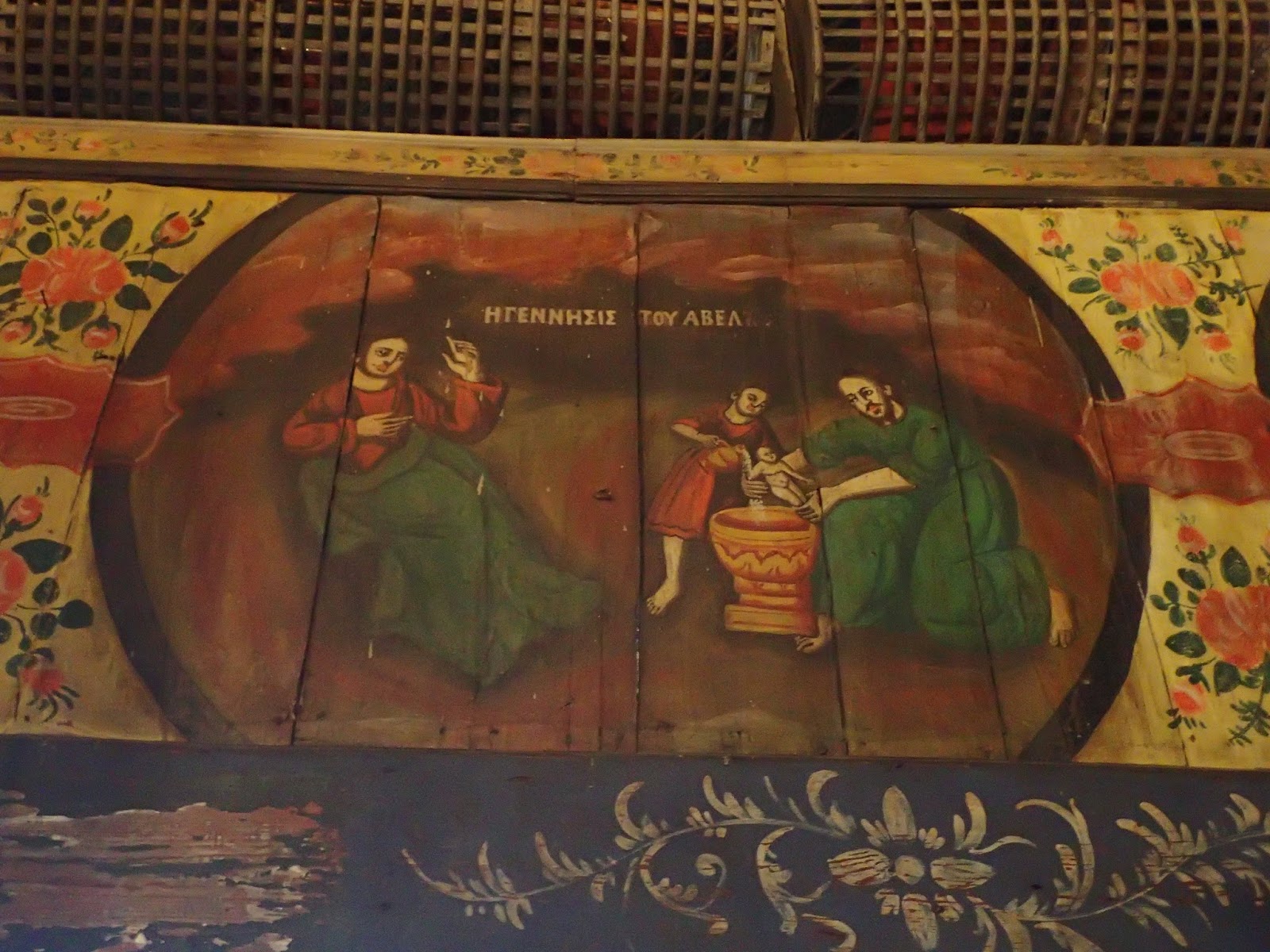
Rather than baroque opulence or Byzantine splendor, it's quiet folkloric beauty that communicates best with the landscape. St. George's Orthodox Church, from 1830, was painted by two brothers from the marsh like, equally sleepy Kalochori. See scenes of the banishment from the Garden of Eden and the early lives of our first family:


Kilkis is less than an hour from Thessaloniki. With as much, or as little as you'd like to do on a Winter outing, it's perfect for a very full day trip, or a very relaxing weekend. 


Read More »

Saturday, November 19, 2016

Cape Sounio, and the Passionate Delinquents of the 19th Century


"If you haven't been to Sounio, then we're not discussing anything else." My friend Chrysoula, also a travel blogger, was decisive; it was not so much advice as an injunction.

Watching the sunset from the temple of Poseidon at Cape Sounio is one of a handful of ultimate Greek experiences where nature and history show each other off. 


Cape Sounio is remote, maybe an hour from the city along an ever narrowing road that hugs a rugged, winding coastline. 

Why build such a grand temple in such a wild spot? Because of the wildness. Don't imagine it peaceful, bathed in golden light. Winds funneled through the straight between Andros and Evia, and more winds from the strait of Chalcis made this this last of challenging seas perhaps the most treacherous. Who can say how rough the seas would have been were it not for this temple to pacify Poseidon. Only after passing the temple in safety could a ship reasonably look forward to coming safely to harbor.

So imagine those earlier travelers while you applaud the sunset (really- everyone claps spontaneously- this is the most festive of group archaeological experiences), the sea benign and serene below. 

But nothing sells an attraction like celebrity guests. I had heard that Lord Byron had inscribed his name somewhere on the temple. Given his services to the nation, it's not so unreasonable he left this mark; it adds a welcome layer of history. 


And it wasn't just Byron. The lower portions of the temple are covered with deeply etched dates, names, initials. These are not some hoodlums with cans of spray paint and fat magic markers. They were hoodlums armed with chisels and hammers, and, over the decades, there were lots of them. The idea of raising a tool to antiquity seems deviant. But it wasn't Greece then, it was the Ottoman Empire. Greece was a cherished idea in the hearts of the people who traveled out to this remote cape, yes deface antiquity, but also to attach themselves to something timeless and monumental, something that in some cases, they ultimately brought back to life. Given the advance preparation needed (the hammer, the chisel, the horses and cart... or maybe a sailboat?), this must have been a requisite activity on the Grand Tour (and for some Greeks). You can imagine them writing of it in their journals- the journeys, if less treacherous, by no means convenient, the remoteness, the success of their endeavor. Maybe this passionate vandalism was a rebellion that in spirit played a role in a much greater one.


To go to Cape Sounio:

There are many organized bus trips that will get you there in comfort, but this is the time to rent a car and hug the curves of the Athens Riviera.


Read More »

Monday, August 22, 2016

Things That Make Mytilene Marvelous


Mytilene- Lesvos' main town - has everything you want from an island and everything you want from a capital at the same time. There is the charm of a harbor filled with "trata" (brightly painted fishing boats) and a promenade of cafes curving around it, plus the cosmopolitan allure of contemporary culture and the grandeur of Belle Epoque prosperity. 

Cinematic Belle Epoque-


Mansions! Mansions galore. And not one kind of mansion either, but a whole panoply of European styles, of mansard roofs and deep eaves. Olive oil was expensive and Lesvos was rich in it. There was also wine, and leather- goods with a market. Foreign importers drawn to Lesvos for business built in the styles of home, as did wealthy Europeans drawn by the famous spas.

These mansions define a whole neighborhood- you feel like you're on a stage set, and probably a little under dressed. 


The Pyrgos Hotel
You could live the Belle Epoque elegance first hand and stay at the Pyrgos of Mytilene boutique hotel. We went for a coffee in the lobby- you feel glamorous just being in the salon with the soaring, ultra-ornate ceiling. It's the real thing- Maria, who invited us to her wonderful island, grew up next door - her mother used to come to dances here.

Big, Bold Baroque-


A house of worship that dominates the city scape - like Notre Dame or the Blue Mosque - sets a grand tone. Mytilene's skyline is defined by the dome of Agios Therapon cathedral, designed by Argyris Adalis- native to Lesvos, and a student of Ernst Ziller (the neo-Rennaissance Numismatic Museum in Athens, among many others). They both borrowed, and borrowed well. Agio Therapon has a grand baroque mood that- like the mansions- doesn't speak of Greece specifically but of a cosmopolitan vibe of European capitals in general.


Ancient Glamour-

The mansions of the Belle Epoque continue a much earlier tradition. Mytilene was a city of wealth from at least the 2nd C BC. We had a tour with Professor Giannis Kourtzellis of the Museum of Archaeology and couldn't stop marveling at the mosaic floors of elegant homes, including the dramatist Menander's. He filled out the corners of our imaginations with symposia and banquets. What also struck us? The reliefs depicting the dinners of the dead, held on the third and ninth days after death (days we commemorate still), and funerary reliefs for heroes- depicted on horseback. Most notable and unusual is the equestrian heroine- women were rarely depicted this way, but then this was found in Eresos (birthplace of Sappho)


And of course this arresting Praxitelous-


We learn that they're easily identified - he was known for the naturalistic "S" shaped pose of his figures. There were lots of them- originals in bronze, and copies in marble.

Fortress of Intrigue-


The best view of the city is wasted on this monumental fortress- Gatalusi's (one-time pirate) home (a wedding present along with the rest of the Island when he wed the sister of Paleologos' - Byzantine Emperor John V - is one of the largest and best preserved of the whole Mediterranean. On our tour with Archaeologist Georgia Tampakopoulou we only had eyes for the ruins and crests, and ears for her stories. She herself was inspired by the place- she had an intuition that led to the discovery of something that would have been lost forever. Visiting the site with her gave us goosebumps to be so close to the thrill of discovery. It is a tale of its own, coming soon.


The mingled crests of Galausi and Paleologos
and the seal of Constantinople

A Symbol of Welcome and People of Grace-

I grew up with a meaningful statue in the harbor by my house- it was for many the first sight of America. How perfect that Mytilene has its own Statue of Liberty-


This is a gift to the island from the people who emigrated from here to New York City. It could not be more fitting: Lesvos has been much in the news, here and around the world, because of how many refugees have passed through here. Ai Wei Wei's exhibition at the Cycladic museum in Athens has the crisis as a focal point, and the images recorded by many local photographers open the exhibition-

Photographs by Petros Tsakmakis
That is one of the reasons we are here- to see how the Island is dealing with this tremendous crisis and to show through our experience how it impacts a visitor's experience. It impacts it tremendously- if you want to be inspired by a population who responds to the need of others with grace, if you want to support an island that has done so much on behalf of us all, then you should come. The only concrete signs we saw of the refugee crisis were signs in Arabic- at souvaki places, and on the public buses. 


Classic Marina Experience-

What's an island without a marina? What's a marina without a yacht club? What's a yacht club without a great kitchen, and some Frank Sinatra and Amy Winehouse? Those are not questions we had to answer, because we spent several happy hours at the Marina Yacht Club with its adorable, unpretentious, and surprisingly young owner Eirini, enjoying all those things. We tried dish after dish- all playful, delicious, but honest and real- exactly what you want to eat as the masts cast ever longer shadows. Best soundtrack, best wine glasses, best view, best hostess. Go. Tastes like holiday.


We loved this little city, crammed with mansions and little boats, with its beautiful museum and outsized cathedral, and its boutique hotel and dining by the docks. We loved the people most of all - for their culture, warmth, and virtue. Lesvos is a perfect holiday destination, and Mytilene is the first taste.

For information on visiting Lesvos, try this site:
http://www.lesvosgreece.gr/

More of Lesvos:

A fabulous party at the EVA distillery in Mytilene where we got to know Lesvos' classic drink:


The Ouzo of Lesvos: Essentials

Molyvos is the Greece of your Dreams


Falling in Love with Lesvos: One Perfect Day
Read More »