Showing posts with label archaeology. Show all posts

Saturday, November 19, 2016

Cape Sounio, and the Passionate Delinquents of the 19th Century


"If you haven't been to Sounio, then we're not discussing anything else." My friend Chrysoula, also a travel blogger, was decisive; it was not so much advice as an injunction.

Watching the sunset from the temple of Poseidon at Cape Sounio is one of a handful of ultimate Greek experiences where nature and history show each other off. 


Cape Sounio is remote, maybe an hour from the city along an ever narrowing road that hugs a rugged, winding coastline. 

Why build such a grand temple in such a wild spot? Because of the wildness. Don't imagine it peaceful, bathed in golden light. Winds funneled through the straight between Andros and Evia, and more winds from the strait of Chalcis made this this last of challenging seas perhaps the most treacherous. Who can say how rough the seas would have been were it not for this temple to pacify Poseidon. Only after passing the temple in safety could a ship reasonably look forward to coming safely to harbor.

So imagine those earlier travelers while you applaud the sunset (really- everyone claps spontaneously- this is the most festive of group archaeological experiences), the sea benign and serene below. 

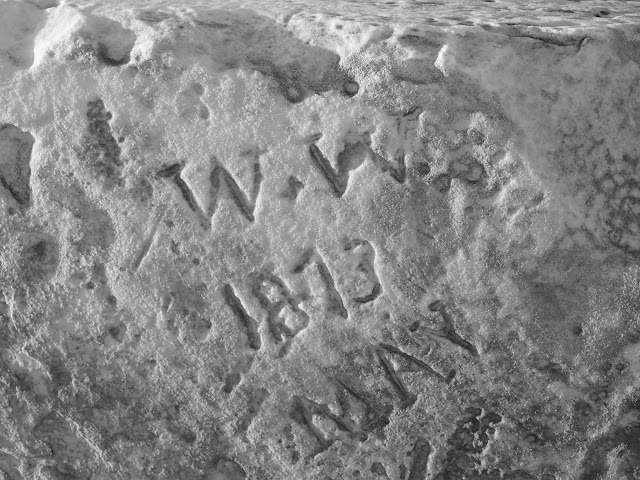
But nothing sells an attraction like celebrity guests. I had heard that Lord Byron had inscribed his name somewhere on the temple. Given his services to the nation, it's not so unreasonable he left this mark; it adds a welcome layer of history. 


And it wasn't just Byron. The lower portions of the temple are covered with deeply etched dates, names, initials. These are not some hoodlums with cans of spray paint and fat magic markers. They were hoodlums armed with chisels and hammers, and, over the decades, there were lots of them. The idea of raising a tool to antiquity seems deviant. But it wasn't Greece then, it was the Ottoman Empire. Greece was a cherished idea in the hearts of the people who traveled out to this remote cape, yes deface antiquity, but also to attach themselves to something timeless and monumental, something that in some cases, they ultimately brought back to life. Given the advance preparation needed (the hammer, the chisel, the horses and cart... or maybe a sailboat?), this must have been a requisite activity on the Grand Tour (and for some Greeks). You can imagine them writing of it in their journals- the journeys, if less treacherous, by no means convenient, the remoteness, the success of their endeavor. Maybe this passionate vandalism was a rebellion that in spirit played a role in a much greater one.


To go to Cape Sounio:

There are many organized bus trips that will get you there in comfort, but this is the time to rent a car and hug the curves of the Athens Riviera.


Read More »

Monday, August 22, 2016

Things That Make Mytilene Marvelous


Mytilene- Lesvos' main town - has everything you want from an island and everything you want from a capital at the same time. There is the charm of a harbor filled with "trata" (brightly painted fishing boats) and a promenade of cafes curving around it, plus the cosmopolitan allure of contemporary culture and the grandeur of Belle Epoque prosperity. 

Cinematic Belle Epoque-


Mansions! Mansions galore. And not one kind of mansion either, but a whole panoply of European styles, of mansard roofs and deep eaves. Olive oil was expensive and Lesvos was rich in it. There was also wine, and leather- goods with a market. Foreign importers drawn to Lesvos for business built in the styles of home, as did wealthy Europeans drawn by the famous spas.

These mansions define a whole neighborhood- you feel like you're on a stage set, and probably a little under dressed. 


The Pyrgos Hotel
You could live the Belle Epoque elegance first hand and stay at the Pyrgos of Mytilene boutique hotel. We went for a coffee in the lobby- you feel glamorous just being in the salon with the soaring, ultra-ornate ceiling. It's the real thing- Maria, who invited us to her wonderful island, grew up next door - her mother used to come to dances here.

Big, Bold Baroque-


A house of worship that dominates the city scape - like Notre Dame or the Blue Mosque - sets a grand tone. Mytilene's skyline is defined by the dome of Agios Therapon cathedral, designed by Argyris Adalis- native to Lesvos, and a student of Ernst Ziller (the neo-Rennaissance Numismatic Museum in Athens, among many others). They both borrowed, and borrowed well. Agio Therapon has a grand baroque mood that- like the mansions- doesn't speak of Greece specifically but of a cosmopolitan vibe of European capitals in general.


Ancient Glamour-

The mansions of the Belle Epoque continue a much earlier tradition. Mytilene was a city of wealth from at least the 2nd C BC. We had a tour with Professor Giannis Kourtzellis of the Museum of Archaeology and couldn't stop marveling at the mosaic floors of elegant homes, including the dramatist Menander's. He filled out the corners of our imaginations with symposia and banquets. What also struck us? The reliefs depicting the dinners of the dead, held on the third and ninth days after death (days we commemorate still), and funerary reliefs for heroes- depicted on horseback. Most notable and unusual is the equestrian heroine- women were rarely depicted this way, but then this was found in Eresos (birthplace of Sappho)


And of course this arresting Praxitelous-


We learn that they're easily identified - he was known for the naturalistic "S" shaped pose of his figures. There were lots of them- originals in bronze, and copies in marble.

Fortress of Intrigue-


The best view of the city is wasted on this monumental fortress- Gatalusi's (one-time pirate) home (a wedding present along with the rest of the Island when he wed the sister of Paleologos' - Byzantine Emperor John V - is one of the largest and best preserved of the whole Mediterranean. On our tour with Archaeologist Georgia Tampakopoulou we only had eyes for the ruins and crests, and ears for her stories. She herself was inspired by the place- she had an intuition that led to the discovery of something that would have been lost forever. Visiting the site with her gave us goosebumps to be so close to the thrill of discovery. It is a tale of its own, coming soon.


The mingled crests of Galausi and Paleologos
and the seal of Constantinople

A Symbol of Welcome and People of Grace-

I grew up with a meaningful statue in the harbor by my house- it was for many the first sight of America. How perfect that Mytilene has its own Statue of Liberty-


This is a gift to the island from the people who emigrated from here to New York City. It could not be more fitting: Lesvos has been much in the news, here and around the world, because of how many refugees have passed through here. Ai Wei Wei's exhibition at the Cycladic museum in Athens has the crisis as a focal point, and the images recorded by many local photographers open the exhibition-

Photographs by Petros Tsakmakis
That is one of the reasons we are here- to see how the Island is dealing with this tremendous crisis and to show through our experience how it impacts a visitor's experience. It impacts it tremendously- if you want to be inspired by a population who responds to the need of others with grace, if you want to support an island that has done so much on behalf of us all, then you should come. The only concrete signs we saw of the refugee crisis were signs in Arabic- at souvaki places, and on the public buses. 


Classic Marina Experience-

What's an island without a marina? What's a marina without a yacht club? What's a yacht club without a great kitchen, and some Frank Sinatra and Amy Winehouse? Those are not questions we had to answer, because we spent several happy hours at the Marina Yacht Club with its adorable, unpretentious, and surprisingly young owner Eirini, enjoying all those things. We tried dish after dish- all playful, delicious, but honest and real- exactly what you want to eat as the masts cast ever longer shadows. Best soundtrack, best wine glasses, best view, best hostess. Go. Tastes like holiday.


We loved this little city, crammed with mansions and little boats, with its beautiful museum and outsized cathedral, and its boutique hotel and dining by the docks. We loved the people most of all - for their culture, warmth, and virtue. Lesvos is a perfect holiday destination, and Mytilene is the first taste.

For information on visiting Lesvos, try this site:
http://www.lesvosgreece.gr/

More of Lesvos:

A fabulous party at the EVA distillery in Mytilene where we got to know Lesvos' classic drink:


The Ouzo of Lesvos: Essentials

Molyvos is the Greece of your Dreams


Falling in Love with Lesvos: One Perfect Day
Read More »

Thursday, August 11, 2016

Thessaloniki's Archaeological Museum- the Sacred, the Secular, and the Surprisingly Familiar


Laid-back Thessaloniki rests on the most cosmopolitan pedigree in Greece. The ruins of the palace and Imperial complex of Galerius share the main pedestrian center with the cafes and all night fast food of the students' quarter, and his triumphal arch is everyone's favorite meeting point before a night out. At the beginning of September, we bring our blankets, pic-nic baskets and bottles of wine to the lawns Ancient Agora to listen to bands and watch movies among the ruins. Two of the Mosques of the Ottoman era- the oldest (the 15th C Alaja Imaret) and the newest (the 1898 Geni Tami) have exhibits and installations and art events throughout the year. Old factories have become concert halls and old warehouses are now museums of photography and contemporary art. The past is so incorporated into our daily life you would almost think we don't even need an official museum of archaeology to tie it all together.

But we have one- Thessaloniki's small (compare to Athens', which is tremendous) manageable Museum of Archaeology is crammed with the all fabulous stuff from the rich areas right outside the museum. You can go in knowing pretty much nothing at all, and leave knowing a great deal, thanks to a logical layout and signage with full and fascinating explanations. The public and the private come together to give a vivid picture of Ancient life.

Imperial City-

The Roman empire was vast, necessitating a tetrarchy, with Diocletian ruling the East, Marcus Aurelius the West, and their respective junior emperors, Galerius and Constantius Chlorus.

Torso of Dea Roma- personification of the city of Rome
The Cuirass (breast plate and back plate fastened together) of an Emperor,
with relief of Gorgons and Nereids riding seahorses,
and Dolphins in the waves

We see the (very large) Imperial glory in the Museum's outer room. 

Sacred Life-

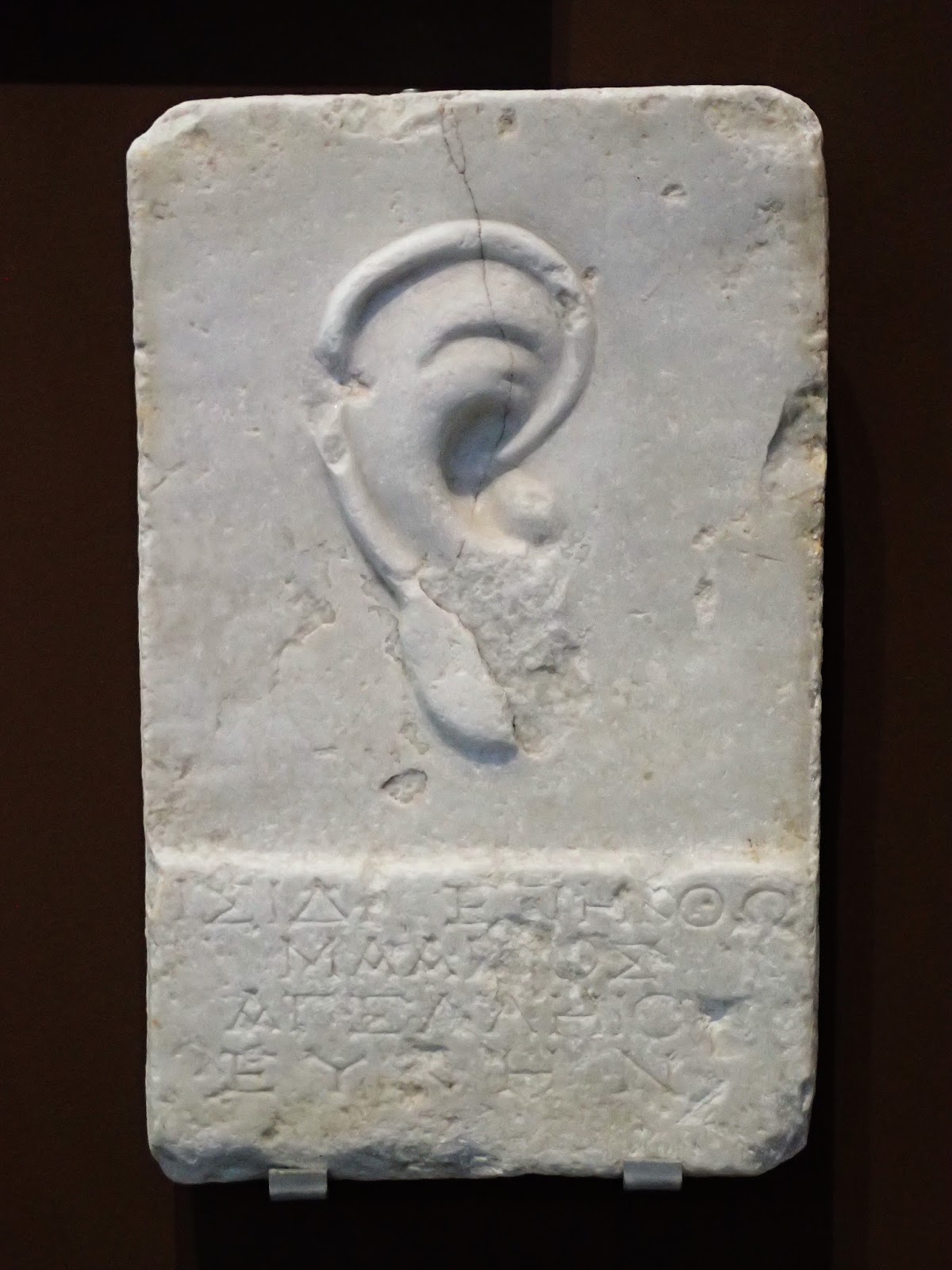
In the first gallery, we are plunged into the spiritual life of the 1st C AD. If you have ever been in an Orthodox church and seen the Tamas on a miraculous icon, it will familiar-


This offering is in gratitude for the Epiphany of the Gods. 

The cult of Isis was wide spread


Here is an Aretology- representing the Goddesse's virtues (Aretes). They were many:


And all things any of us would want.

Sacred meets Secular-

The division of the sacred and the secular was less defined than in our world today. The Pythian games were held in honor of Apollo every four years. People flocked to the city to see not just athletic and musical competitions, but also gladiators, and combat with wild beasts.

These tokens functioned as a free ticket for honored guests
Later on, in the 4th C AD, the Hippodrome was built, integrated into the Galerian complex. It held 15,000 people, coming to see the same sorts of spectacles. These Gladiator and wild beast combats were wildly popular, but also expensive to put on. These were nearly exclusively for the Imperial cult, this itself- the worship of an Emperor as deity- showing the same seamless blending of the sacred and secular.

The mood of decadence and reverence continues. One of my favorite objects is this-


That's Dionysus embracing a satyr, made around the time of the Pythian games. What's that coming from the top of his head? This is a Trapezophoron- a table support(!) that would make a banquet of a bunch of grapes. Evocative table supports such as these have not gone entirely out of fashion:


Of the twelve Gods of Olympus worshiped in Thessaloniki, Asclepius and Dionysus were especially popular- both had tribes named after them. In the case of Dionysus, also a neighborhood-


Our picture of the first centuries AD in Thessaloniki is filling out now, and it is not a dull one- banquets at tables with the tackiest most fabulous table-legs you can imagine, blood shed at sacred brutal games attended by thousands, processions of Phalluses.

Culture-

Not all public gatherings were as sensational- there is also a magnificent 2nd C AD Odeion, still almost entirely intact, at the west end of the Roman marketplace. The aristocracy would gather here for performances of theater and music, and for poetry readings. It was decorated with statues of the muses, and of a wealthy patroness.

The Richness of Domestic Life- 

The picture becomes fuller still with the displays of private and domestic life. Thessaloniki had a great mosaic workshop, and floors of wealthy homes and baths were often decorated with mosaics-


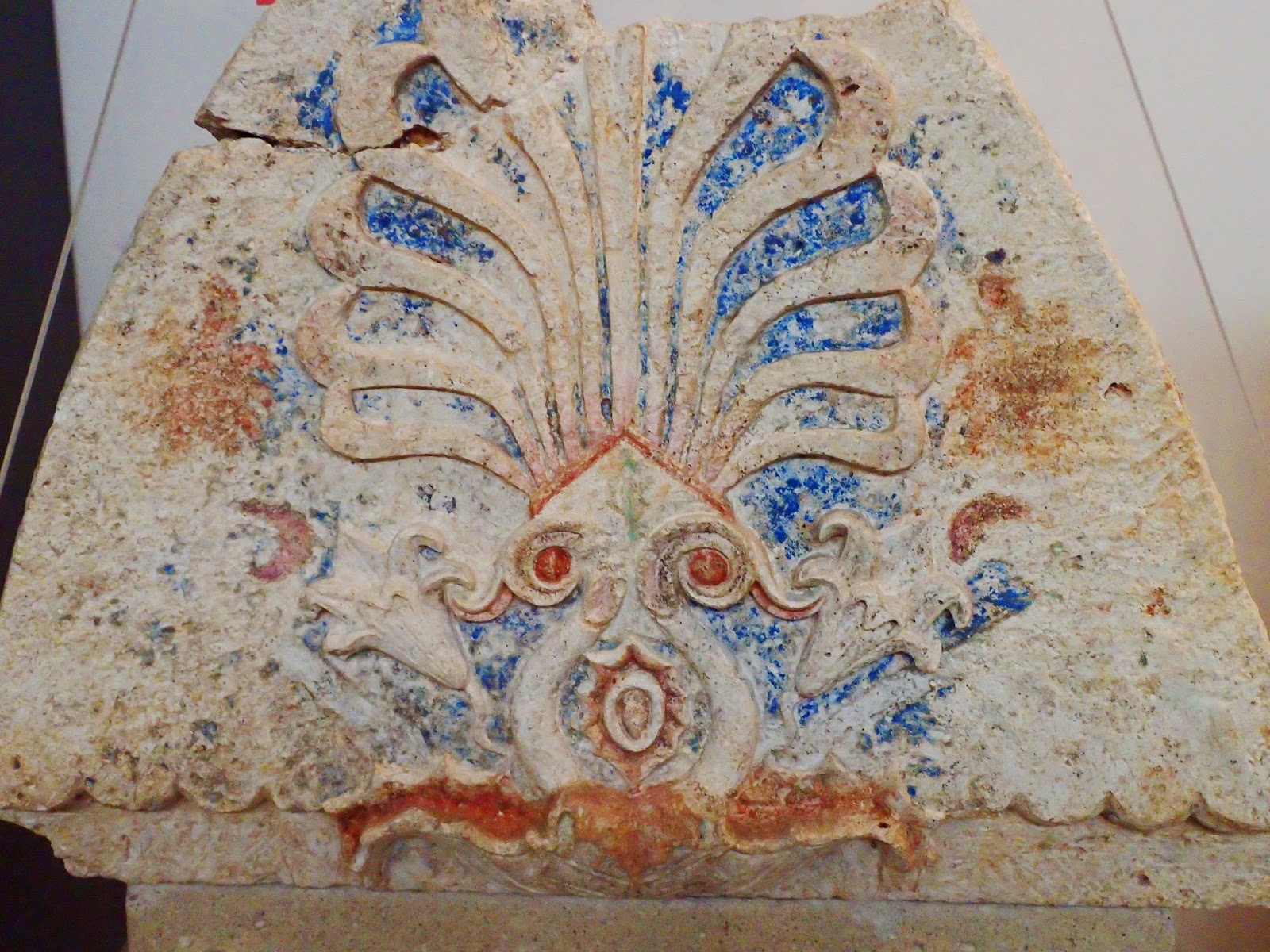
We read of their diet- The Romans favored spices and sauces. From inscriptions we know that the among the aristocracy the diet was rich in variety- fish and shellfish, venison, rabbit, pheasant, and chestnuts, almonds, pomegranates, and figs. We know they held symposia, gatherings of urban elite to exchange ideas, and that they listened to the flute and the kithara, and that the flute- accompanying symposia, theater, and rituals, was also used to give pace to the strokes of rowers and the marching f soldiers. The mosaics have survived, but the paintings have not- walls were covered with frescoes. We can imagine the colors though, because they survive on fragments and on other objects:


We even know they smelled nice, from accounts of "myropoles" (merchants of fragrance), from the beautiful perfume vials found in tombs, along with hair combs, diadems, make-up in small pots. Cura dabeit faciem- "care boosts beauty" (Ovid, The Art of Love) is quoted in the museum's display.

An hour or two will give you an intimate glimpse of the rich and intricate life in our beautiful city of the first centuries AD. You will leave with some understanding of how they celebrated, what they did for recreation, how they dined, what they thought was beautiful, and most importantly, what mattered to them. You may find, as I did, that (excepting maybe the combat with wild beasts and processions with phalluses), it is a very familiar world.

The Museum is open seven days a week, from 8:00 am to 8:00 pm.

http://www.amth.gr/en

More Thessaloniki:


Kinda Blue- Searching for the Roots of Rebetiko


The Lives of Others- Villa Bianca


Open House- Falling in Love with your Hometown
Read More »