Showing posts with label Athens. Show all posts

Tuesday, December 27, 2016

Winter Swim at Lake Vouliagmeni


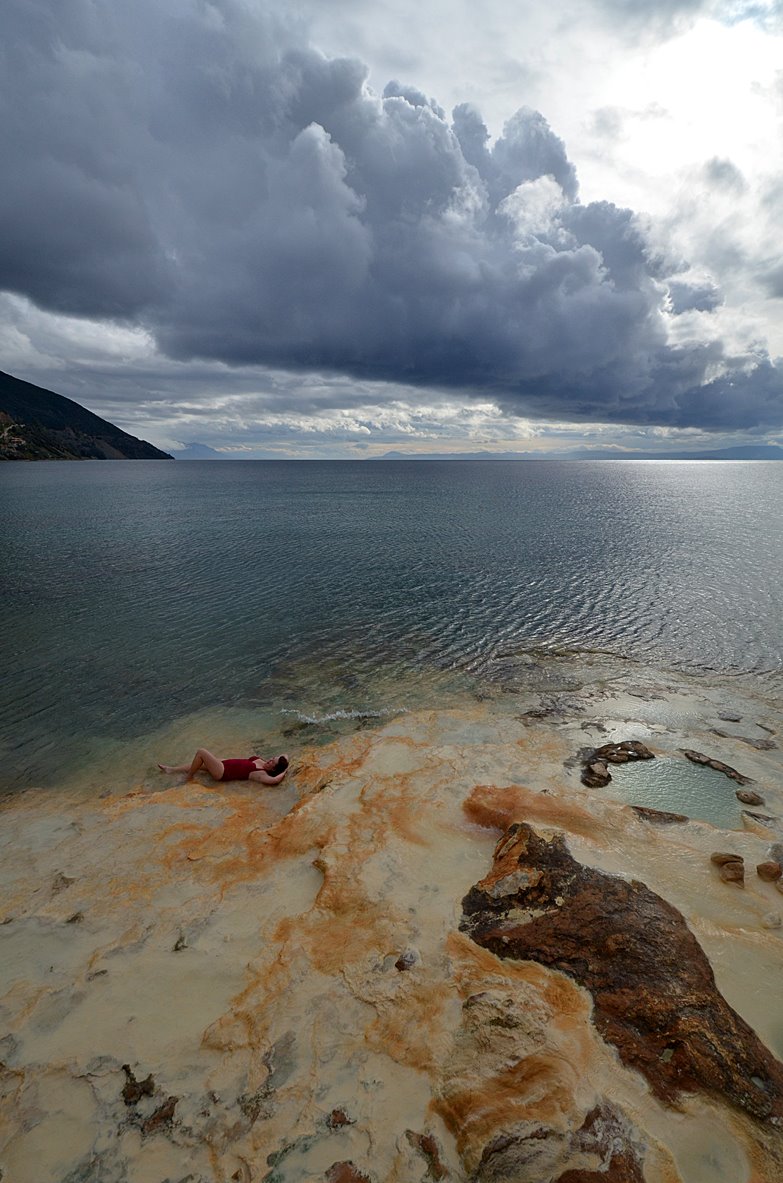
If you're lucky, in Greece you can keep swimming through November. But by the holidays, you have to be really tough. Or you can try a thermal spring- you can see the steam rising from Lake Vouliagmeni on a cool day.


The lake is sheltered by a cliff that catches the sun, and has a small beach at one edge, There is a narrow wooden deck running all along one long side, across from the cliff. It's just wide enough for a chaise lounge and a little room to walk by. Then it's just big enough for a chair. These are the best spots- get out the stack of magazines you have brought, read, nap, watch the light change over the cliff face. Time to go in? The steam rising off the surface really only means that the water is warmer than the air. It doesn't mean it is warm. What you do is you go in, then get out and feel how much cooler the air actually is, especially when you're undressed and wet, wait a minute and get good and cold, then plunge back in. Not too bad now. Keep moving, slowly. Were you spoiled by the salty thick waters of the Aegean all summer, where you can keep yourself afloat paddling gently with one hand while you hold a gin tonic in the other? (not every time- I had my godmother visiting). You will sink like a stone in this lake if you don't swim like you mean it. 


Anyway it's good to keep moving- there are small fish that will come and nibble the dry skin off your feet if you stay still for more than a minute. So keep moving gently if you don't want an involuntary pedicure. but some people come here just for that! They roll up their pants legs and sit on the deck, swarms of fish obscuring their feet. I tried it. It's described as a "relaxing massage" on the lake's own website, but looking down and seeing myself being gnawed by a swarm of fish was not relaxing.

There is a pleasant feel of gentle convalescence- more spa than beach party. The lake is supplied from a spring rich in salts and minerals (potassium, sodium, lithium, ammonium, calcium, iron, iodine) - good for muscles, bones and joints, and good for the skin. Many people are here for therapeutic reasons. Give yourself over to the spa mood, and take your time. Your ten euro admission entitles you to lounge in comfort all day, so bring some magazines, and a sketchbook.

Lake Vouliagmeni's winter hours are 8 am - 5 pm.

Visit their site for a phone number and information on how to reach the lake by public transportation:

More spa experiences in Greece:


Bliss Springs Eternal at Thermae Sylla


The Ultimate Spa Holiday


Walden meets Breakfast at Tiffany's in Almopeia
Read More »

Saturday, November 19, 2016

Cape Sounio, and the Passionate Delinquents of the 19th Century


"If you haven't been to Sounio, then we're not discussing anything else." My friend Chrysoula, also a travel blogger, was decisive; it was not so much advice as an injunction.

Watching the sunset from the temple of Poseidon at Cape Sounio is one of a handful of ultimate Greek experiences where nature and history show each other off. 


Cape Sounio is remote, maybe an hour from the city along an ever narrowing road that hugs a rugged, winding coastline. 

Why build such a grand temple in such a wild spot? Because of the wildness. Don't imagine it peaceful, bathed in golden light. Winds funneled through the straight between Andros and Evia, and more winds from the strait of Chalcis made this this last of challenging seas perhaps the most treacherous. Who can say how rough the seas would have been were it not for this temple to pacify Poseidon. Only after passing the temple in safety could a ship reasonably look forward to coming safely to harbor.

So imagine those earlier travelers while you applaud the sunset (really- everyone claps spontaneously- this is the most festive of group archaeological experiences), the sea benign and serene below. 

But nothing sells an attraction like celebrity guests. I had heard that Lord Byron had inscribed his name somewhere on the temple. Given his services to the nation, it's not so unreasonable he left this mark; it adds a welcome layer of history. 


And it wasn't just Byron. The lower portions of the temple are covered with deeply etched dates, names, initials. These are not some hoodlums with cans of spray paint and fat magic markers. They were hoodlums armed with chisels and hammers, and, over the decades, there were lots of them. The idea of raising a tool to antiquity seems deviant. But it wasn't Greece then, it was the Ottoman Empire. Greece was a cherished idea in the hearts of the people who traveled out to this remote cape, yes deface antiquity, but also to attach themselves to something timeless and monumental, something that in some cases, they ultimately brought back to life. Given the advance preparation needed (the hammer, the chisel, the horses and cart... or maybe a sailboat?), this must have been a requisite activity on the Grand Tour (and for some Greeks). You can imagine them writing of it in their journals- the journeys, if less treacherous, by no means convenient, the remoteness, the success of their endeavor. Maybe this passionate vandalism was a rebellion that in spirit played a role in a much greater one.


To go to Cape Sounio:

There are many organized bus trips that will get you there in comfort, but this is the time to rent a car and hug the curves of the Athens Riviera.


Read More »

Friday, September 2, 2016

Style and Substance- Vintage Fashion at Yesterday's Bread, Exarchia (Athens)


Exarchia- haven of ruthlessly independent creative activity- makes me homesick, for a time as much as a place. There is no Starbucks, no Accessorize, no multi-national faux culture or ersatz style. In short, welcome to 1980's Manhattan.

Although I adore watching Sex and the City, it has ruined my beloved city's reputation. I love the fun and the fantasy and Patricia Field's marvelous vision, but there's a vibe of trying way too hard that is very not Manhattan, and particularly not downtown (the word "downtown" automatically embodying the ethos from Taxi Driver to Paul's Boutique). Of course we put in effort, but it was organic, indigenous, creative, and above all, pretty cheap. The very few new things in our wardrobes came from the designers themselves (Betsey Johnson still had stalls at street fairs, and I could afford to shop there with money I earned babysitting), or from Capezio (leotards and butter soft ballet slippers- meant for hardwood. After a week on grimy sidewalks we were essentially barefoot), but most of our clothes were from flea markets and vintage shops- bed jackets (worn over a leotard, with old jeans and ballet slippers), fedoras, ball gowns (also to school), pegged black jeans from Trash and Vaudville and t-shirts we cut the necks out of (my favorite was from The Specials)- these were our school clothes. From Patricia Field's shop on 8th street, we bought boxes of face powder from Japan. It smelled like cherry blossoms.

So, back to Exarchia-

Charlene my older girl and I were on a trip to Athens a few years ago, and she was at this perfect age where she was starting to understand what she wanted to project, but she had trouble finding the raw materials. She got a Hell Bunny dress covered in playing cards in London on the way to San Francisco, some frilly knickers thing at Dark Garden (custom corset shop) in Hayes Valley (SF), and a Series of Unfortunate Events - mood dress in Edinburgh when she went for the Fringe with her dad, but the rest was pretty much McBershka. You don't really want to find a piece of yourself in a multi-national mega shop.

So anyway there we are on Benaki- in this sweet neighborhood that, like '80's Manhattan, doesn't need to try too hard- and she sees this poster in the window of the furniture repair shop- a Betty-Pagesque girl with a '50's dress and '40's shoes was standing in a distinctly Exarchia doorway. She does a little squeal- real girl, real clothes, real style. There was a name- Yesterday's Bread- and an address- Kalidromiou, close to where we were staying, a block or two from the square. 

That's where we met Strato and Daphne, who, although we have seen them less than a dozen times, are very much a part of our world. Each of my girls found a piece of themselves in this shop, like they could finally realize a vision that had only been abstract up to then. The store is made for this- just enough organization to find what you need- rows of men's jackets, rows of dresses, etc., and just enough chaos to make it feel like a you broke into the wardrobe room of a theater- steamer trunks of scarves, of corsets.   We stayed a couple of hours our first visit- she tried on lots of things, refining and self - defining as she did. After a while, Daphne could see where she was going and helped her get there. Charlene got lots of stuff, a vintage one-piece, shirts, dresses. 


I got a dress too- full skirted, shawl collared, self-belt, that I wear all summer, and a leopard cape I wear all winter.


Another time Charlene came back with a burlesque/circus dress, ruffles, trailing at the back, short in the front, very Panic at the Disco. It's not conventionally practical, but on the other hand, when you need it, you really need it- nothing else is going to satisfy that mood. We like a sense of occasion in our household.

Mei Mei went a few years later, at that exact same time in her life when she was deciding how she wants to look. She got a kelly green polka-dot skirt, some vintage pin-stripe converses, and a beaded satin evening bag, shaped like an owl. She wore them all to tea at the Grande Bretagne:

Mei Mei in Exarchia on her way to tea
Getting ready for school
On our next trip, my mother bought her a floor length strapless black lace ballgown, and a mauve velvet hat. She wore the dress to her beach party for her 18th birthday, and many times before and since. My mother also bought a bold babushka scarf for herself, like the kind from the Ukranian stores on the Lower East Side.

So why all the stories? Because clothes matter. You can have an all night beach party for your 18th birthday in a dress from the H & M, but something will be missing- clothes are a part of your history, as essential for defining who you really are as a costume is for a character on stage. How does vintage help in the the quest for figuring out who you are? For one thing, wearing clothes that already have a history of their own can give you a head start. Fashions recall eras, and all the things that belong to them- philosophy, design, politics, and, not least, music. Also, things are a lot more special when there is just the one, not hundreds, in the city.

Check Yesterday's Bread's facebook for their store hours. From the square of Exarchia, go on the mostly pedestrian street Tsamadou until you get to Kalidromiou (3-5 minutes)- make a sharp right and it's just a few steps up. (If you're visiting the Archaeological museum, it's right near by).

I didn't mention the prices-  they are very, very good, but that's not why you would come.

You could think of them as rescuers of fashion. They're also rescuers of dogs- met Beer, the wobbly legged baby pointer Daphne found:


Beer sent Fiona a bandanna:


Yesterday's Bread
Kalidromiou 87-89
210 881 1233

More pleasures of an authentic life in Athens-


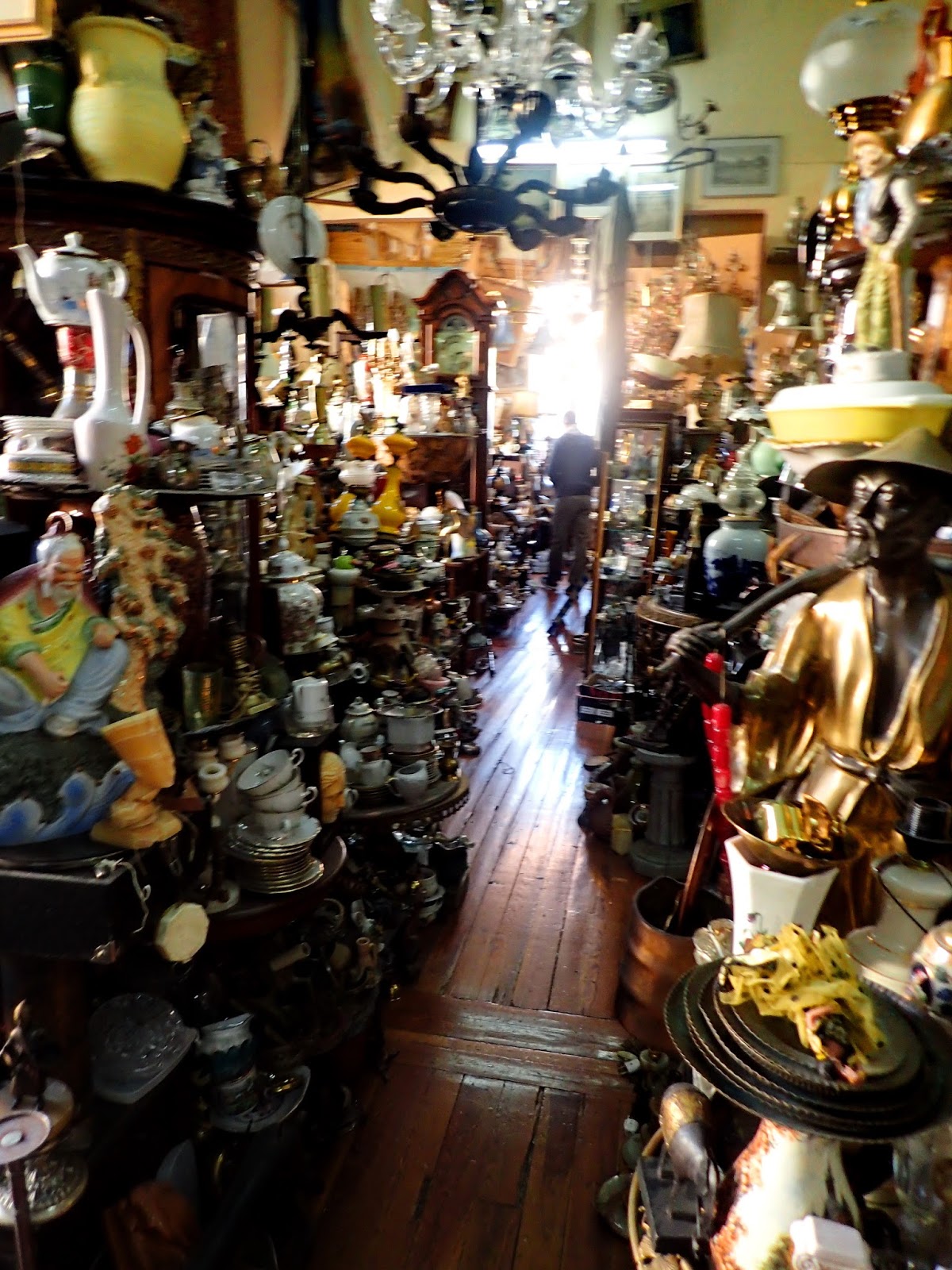
Not so Ancient Athens- a mysterious antiques bazaar near the fish market


Community and Culinary tradition (Food, and a little Love- at Mana's Kouzina Kouzina)
Read More »

Saturday, August 13, 2016

Food, and a little Love- Mana's Kouzina Kouzina


You can find out a lot about someone's character when they are under pressure. Nations, too. The crisis has revealed some very fine qualities in the people of Greece: a deepening of the appreciation of community, of heritage, great resourcefulness, and not least, a determination to enjoy life, every day.

Fortunately, all of these qualities are edible. You can eat them at family tables all over Greece. Or at Mana's Kouzina Kouzina, where every dish has a pedigree, integrity, a delicious piece of heritage on a plate. (Why "Kouzina" twice? There is a beautiful little sea turtle that lays its eggs on beaches. It's called the Caretta Caretta, and it's endangered, a little like the cuisine Mana's seeks to preserve). 


Mana's Kouzina Kouzina has an inspiring story- it's the story of what is going on all over Greece now. On account of the crisis, Stefanos Spathas- like so many people- felt compelled to start something fresh and new, completely from scratch. All the places that slowly later opened on this now thriving square around the Church of St. Irene has a similar story. That makes for an incredible energy and optimism.

Drink local-

I love what Manas does not serve almost as much as I love what they do serve- this is a little multinational-free universe. What they do have? Greek brands only- small producers of superb drinks. If you grew up in the US, Greek soft drinks- packed with vibrant fresh juices and sometimes made with natural springwater- will be a revelation. Even our beloved imported Orangina is bland by comparison. Better still there are the beers. 

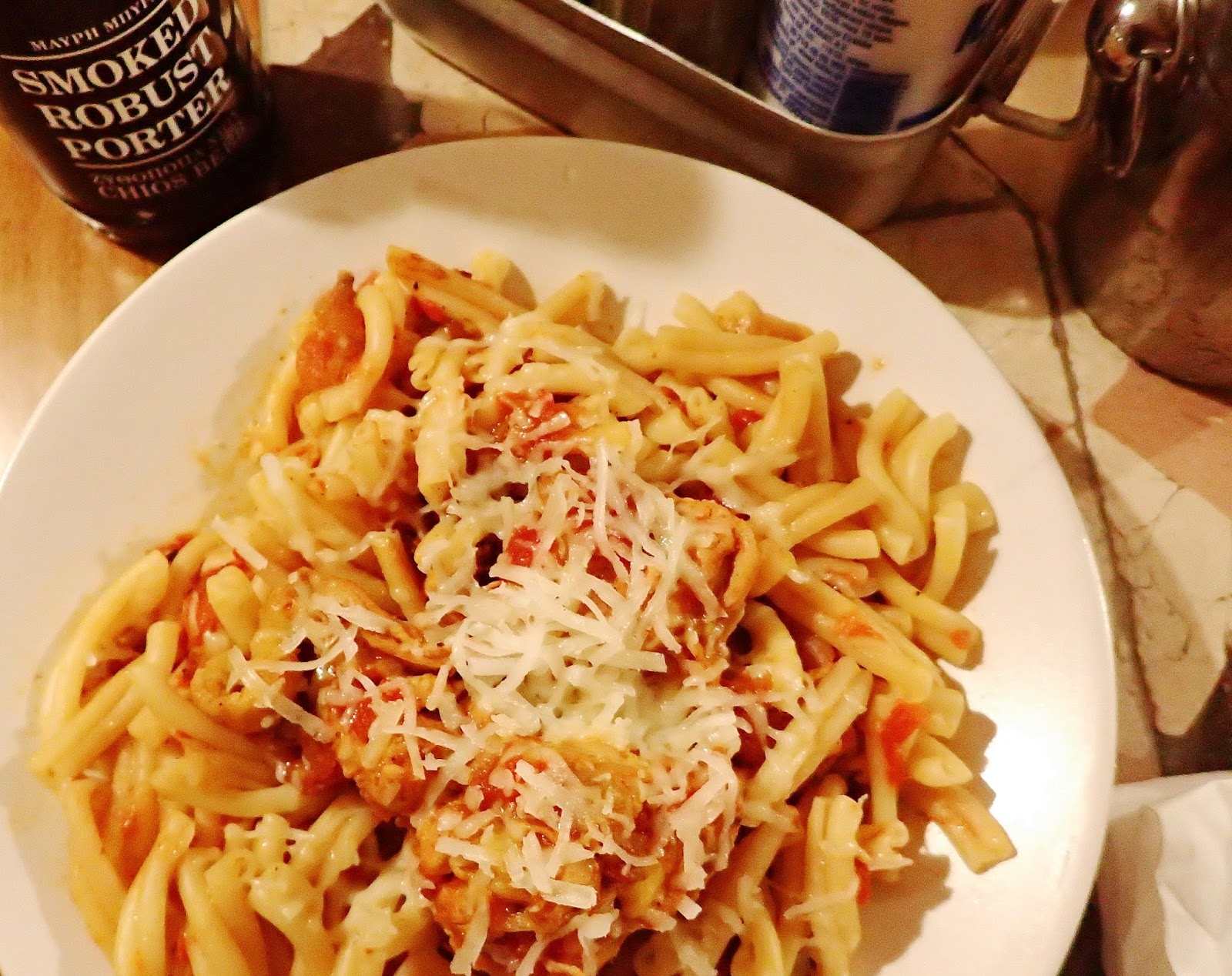
Greece has many new small breweries making interesting beers. Stefanos' son, Giannis- beer sommelier- has put together one of the largest craft beer menus in Athens. We try a smoked porter from Chios, a weissbier called Odyssey with a sweet after-taste, and Ali, a non-pasteurized IPA from Thessaloniki. 

There are also Greek spirits- ouzo, tsipouro, raki, and wines by the carafe:


Eat Local-

All of the products here are from small and medium Greek producers- great quality s one reason, supporting the community another, but also every region has specially protected items- cheeses for exampe- something so specific to the terroir and culture both that they are treasures in themselves. 

Cook... not so local.

Greece, though not large, is very, very complex- there are a lot of terrains and traditions, micro-cultures, heritages. One island's most celebrated dish may be unknown on another; the mountains and their flocks have warming cheeses and meats, the sea is full of sweet, delicate Meze (for ouzo). Stefano travels, goes into kitchens and asks questions and tastes and tries, bringing back to the restaurants authentic things. The chef, Dimitris, has a good hand with them. This is Pastizada, from Korfu- a braised rooster in tomato and sweet spices over pasticcio macaroni. Except you see it is not- this is mesta, a hand-rolled pasta from Chios, instead- a little artistic license is an opportunity to celebrate an authentic product from another place.


We loved the inside-out gemista (stuffed vegetables)- it's actually the homey classic trahana- a rustic tiny pasta of grain and yogurt, with the vegetables mixed in:


Celebrate... also not so local-


We're a group of travel bloggers (TBG), either from Greece by birth, or lovingly adopted by the country in the meantime. We were all here to have a get-together and meet our newest member Gabi (from Italy!) and also Kyriaki, a friend we met in Lesvos, to do an interview for her and her colleague Eirini for Greek TV (which we learned is in San Francisco). In short, an international group brought together by the irresistible magnetism of Greece. Greece's magnetism is edible, too.

Dessert made for lingering (and a little philosophy)-


Kunefe, a katifi filled with melted cheese,
toasted in butter, drenched in syrup, and served warm.
Dimitris comes up with a whole tray of things for us to try- a still warm kunefe (from Asia Minor), an orange syrup pie, rich chocolate cake, and a galatopita- a gentle "milk pie" like a custard with maybe a little semolina holding it together. "What's in the pie?" one of us asks him.

"Just milk, and a little love."


That is the heart of it- everything is made with a little love here, and you can taste it. 

Mana's Kouzina Kouzina is open for breakfast (!), lunch, and dinner, in the shady square of Agia Irini on the pedestrian street Aeolou.

Mana's Kouzina Kouzina, 27 Aeolou, between Kolokotroni and Athinaidos
210 325 2335

here's the site-


This authenticity is not an experience visitors often have- they may have the tastes, but not necessarily the meaning. Mana's Kouzina Kouzina preserves edible heritage. 
Read More »

Sunday, July 31, 2016

The Most Romantic Restaurant in Athens


Summer in Athens is crazy romantic- the song of cicadas is hypnotic, the breeze is filled with the scent of wild thyme, and the stones hold the heat of the sun long into the night. When you scan the horizon, there's the Parthenon. 


If you're lucky enough to be having dinner at Point α, on the rooftop of the Herodeion Hotel in Koukaki, you won't need to look hard- you're smack across from the Parthenon, close enough, Katia our hostess says, that every element of the restaurant's construction and decor had to be approved by the minister of culture (the Acropolis Museum is even closer- you can make out the rippling muscles of the backs of the marbles.) It makes sense- the place basically feels like an extension of the Parthenon. 

But we are not here for a history lesson; our happy group of friends - Travel Bloggers Greece - are here to have a good time- a distinctly Greek good time. Charming barmen make cocktails with charming names (I had the Act I Drama, topped with a cevice tapas I would have ordered for dinner), the sky turns pink, and- just as the Parthenon lights up- you clink glasses with your friends, several times. Appetizers start arriving- Avant garde, playful de-constructions of the essentials of Greekness. The first thing that arrives is a centerpiece- olive branches by a jeweler. But the olives are not metal- they look almost velvety. "Take one" Jenny says. It's not velvet- it's frost! I slip it into my mouth and a layer of green olive oil sorbet coats my mouth, then there's a rich, savory olive ice cream I enjoy for a moment longer. It's served with rustic whole wheat bread, like you would have if you were eating under a plane tree at your aunt's house if your aunt were from a village in Crete with a wood burning oven. Not such a fanciful analogy- the team of two chefs are from Crete- for all the fantasy, there is also a simple, beautiful truth.


Then Loukumades- usually a sweet, honey syrup soaked thing- these were crisp and hot and filled with fresh cheese- tangy and savory, with a hint of honey for balance. Another dish was Imam Biyaldi- known to all as eggplant stuffed with onions simmered in tomato- a garden dish.


Ours comes coated in delicious black "dirt", with the gardener's footprints crossing the plate.

We were there on the full moon. I realize you can see the moon from everywhere, but it looks fatter and more golden from Athens. We're all bloggers, so half of the fun is photographing everything before we drink it/eat it/take it in-

From left, Elena, Marissa, Chrysoula, and Rebecca,  photographing the moonrise
We lingered over the main courses, sharing everything, the king fish a great favorite, and everything wonderful. Where the appetizers are playful, the main courses - equally inventive- are a little more serious, classical.

Then something happened that endeared me- Katia came to see if any of us needed a pashmina in the evening breeze. She also confessed she had a store of fans for a heat wave. Never have I felt more coddled- in the spirit of the best Mediterranean hospitality,  Point α, stunning as it is, is not about impressing at all- it's about enjoying the beauty of the moment.

l- Marissa and Katia, r- Jenny and Elena

Another Romantic thing do in Athens- seeing a performance at the Irodeio-


Carmen, in the moonlight...
Read More »

Thursday, July 28, 2016

Carmen, in the Moonlight, at the Ancient Irodeio Theater in Athens


It's the beginning of act IV of Carmen. I'm sitting stage left at the Irodeio, itself a sight- rows of crumbling arches stacked up three high with shrubs of thyme growing out of them. To the left is the Parthenon, and closer- hard left- is the Temple of Athena Nike, so bright it nearly looks like it's on fire. From the rocks of the Acropolis itself, jutting out from the base of the temple, the night guard watches the opera, chin on his fist like a Rodin.
The Temple of Athena Nike is so bright you can't make out the Rodin/Guard in the photo- 
 he is on the mound of rock just to the Temple's right.

The act starts with a reprise of the Toreador song from the whole ensemble. Just at the song's most triumphant moment, a murmur spreads through the crowd- the moon- fat, gold and three-fifths full- is rising over the mountain, just to the right of the Parthenon. 

Culture is not always about the esoteric. Perfection can also be conventional, universal, all of the parts of a classic experience coming together at their very Zenith- hot, thyme - scented breeze, the moon, the much loved aria, the Temple of Athena Nike, the Parthenon, the guard watching.  Fans flutter like butterflies and the hushed amphitheater, still giving off the heat of the day, quivers. When you think of everything that went into this moment it's overwhelming- the rise of Athens and the vision of Pericles in the 5th C BC, the life of Herodes Atticus- Greek Aristocrat and Roman Senator- and more to the point the life of Aspasia Annia Regallia- his wife - she must have been wonderful because her memory inspired him to build this theater (and lots of other things), in the 2nd C AD. Then, God had to make the moon, then for that matter God had to make Bizet, then all of us had to be born in the late part of the 20th C with the good fortune of relative peace and prosperity to enjoy the orchestra and the fluttering fans and the warm stones and the voice of Rinat Shaham (or tomorrow, Geraldine Chauvet).

How much prosperity exactly? For the quality of the experience, not much- 25 Euroes for the upper tier. Tickets go up to 85 Euroes for the lower section, surely worth it, but then we saw so much more of the Parthenon and the moon. Click here for a seating chart and tickets. 

You don't have to know much about opera to enjoy Carmen- it's filled with recognizable songs. The theme is recognizable too- a femme fatale, (with a predictable emphasis on the fatale), the elusive yet all consuming nature of love in the Habanera, which you have heard a hundred times (to say nothing of experienced first hand), the hand of fate in the deceptively light Voyons, que j'essaie à mon tour (the card song). The experience is universal, eternal- there is no sense of time. In fact, it was four hours, including one official intermission for drinks, and two set changes-


You don't need to know much to enjoy a performance at the Irodeio either-


1. If you get the upper tier tickets, a great value, know that they are open seating- the earlier you get there the better. There can be no pleasanter place to take in the changing light of dusk. There are cushions in the upper tier as well- a relatively new addition.

2. Prepare with the following in mind-
       - The stairs, of which there are many, are unusually steep and shallow. There's no call for sports'  shoes, but be practical (and safe).
       - Shorts are unbecoming and unsuitable on the plasticized cushions.
       - Bring water, and buy more- the dry hot night feels wonderful, but is parching.
       - A fan adds as much comfort as style to the occasion. They are by no means pretentious.
       - Neither are small binoculars!
       - Hats, though, will be unwelcome in such narrow and shallow seating.
     -The theater is filled with the memories of legendary performances. There is no need to be excessively casual. 

As spectacular as a performance may be, the setting, the history, the sensation of the hot stones and breezes, the sight of the Temple of Athena Nike nearly ablaze, and, hopefully, the moon, make magic of their own. 


Want More Athenian Romance?-


Read More »

Wednesday, February 17, 2016

Night at the Museum


The most tedious movie I have ever seen centered on the unarguable premise that the Parthenon marbles belong at the Parthenon. Tortured, dramatic speeches were interspersed with scenes of the Grande Bretagne ablaze with molotov cocktails. It was so dull it was nearly treasonous.

Where cinema fails, architecture comes through. Come nightfall, the Acropolis Museum is all poignance and passion.

For those who haven't been, the museum at any time of day is contextually brilliant. Statues and artifacts fill the first two floors. The individuality of some of these is arresting:


They are full of immediacy, intimacy. You know you are before a likeness of someone who lived.

There is a Kore with beautifully plump cheeks and some astonishing traces of blue and red(!)- thrilling to see. A display of the bold pigments that were used literally floods your imagination with color, and you see everything differently (kind of like The Wizzard of Oz). The top floor is stunning- a 1:1 model of the Parthenon, with the original sculptures where they were, and plaster casts of the marbles that are sadly elsewhere where they likewise would be. The initials "BM" are all over the place. As a practical argument, it is matchless. As a contextual experience, complete.

If I'm only at a museum once- just passing through town like say Frankfurt- the joy of seeing is seriously mitigated by the urgency to take it all in. There ends up being more reading and looking than seeing- it is very hard to just be in the moment when you are at last face-to-face with a much anticipated thing seen a hundred times over in reproduction. I'm usually able to give myself over to the experience only when I have the luxury of visiting over and over again. 

The Acropolis Museum is happily such a place. But that is not what made a recent evening there so mesmerizing. The top floor has walls entirely of glass, and as you walk through the magnificently reconstructed ersatz Parthenon, you see the real one close enough to wave to. 

Whether the effect of the glass at night was calculated I cannot say, but it makes for an experience entirely different from the day- one so moving and contemplative as to completely transcend the cultural. In the evening, voices drop as light dims, and a reverent hush falls over the museum. The glow of Parthenon itself against the velvety night sky dominates the room- not just visually, but emotionally. I found I was hardly looking at the sculptures at all, but instead at the glass. The sculptures become, quite literally, reflections of the past, their luminous images hovering in the night sky somewhere between the museum and the place that they came from, like they are reaching out to it. 


Forget what I said about being "in the moment."  There is no moment- time is suspended. And you are just hovering there, like the reflections, between the present and memory.


The  Acropolis museum is at 15 Dionysiou Areopagitou Street (make time for a stroll on this broad, elegant pedestrian promenade that wraps around the Acropolis- you can follow it all the way to Thisseo) and has its own metro stop. The museum has great hours- even in summer, you can enjoy a nighttime visit- it's open until 10 pm on Fridays- For more information, click here. For more information on the unification of the Parthenon marbles, click here.

More things I love to do in Athens:


An Athens weekend of Picasso and Pastis.


A sacred, secret street


Read More »