Showing posts with label Winter. Show all posts

Thursday, March 2, 2017

Pelion is Gorgeous in the Rain- things to do in Zagora, Kissos, Vizitsa, Milies, Portaria.

Pelion is dazzling in the sun, but it takes a rainy day for it to really shine. We found the dramatic snow-capped mountains-meet sea scenery and postcard-perfect villages even more romantic in the rain. 

Have a Tsipouro in Zagora-


Whenever it rains at home it feels like perfect weather for red wine. Well, in Pelion, it's perfect weather for Tsipouro- the distilled grape spirit, usually scented with anise- a sort of turbo-ouzo. In Pelion, it is served in individual bottles- maybe so you can keep track?- and always enjoyed with meze or classic dishes. We loved Tsitsiravla- a wild local green served with a shocking amount of garlic:


cutting through garlic seems to be one of Tsipouro's many marvelous properties.We had enjoyed the classic Pelion dishes at Patis.


Bella Aglaida of the Vizitsa Women's Cooperative gave us a tour of their workshop,
and jars of ethereal 'glyko koutaliou' to take home. We also bought more Tsitsiravla!

Visit the Vizitsa Women's Cooperative:

A beautiful thing in Greece: groups of women in rural regions form their own organizations to preserve recipes and local food ways- museums of edible culture, taste memories, and delicate skills. Vizitsa's cooperative started five years ago- local women invested their own money to create a workshop and kitchen where you can take lessons and shop for local handcrafted foods, like the "glyko koutaliou"- spoon sweet- made with local fruit.


Kissos and Milies have fabulously beautiful Churches:


Agia Marina of Kissos
From the outside, they look like village churches- white painted walls, the classic slate roofs of Pelion. It's like opening a jewel box- the Churches are surprisingly opulent inside. This is a testament to Pelion's wealth (much of that from the cotton industry of Egypt, which they developed), and discretion- Pelion was a privileged area in the Ottoman period, but still....

We had an excellent tour of the Church of the Archangel, built in the early 18th C- the interior the work of a single monk from Mt. Athos, who took 33 years (as the life of Christ) to paint it. Years of soot had covered the frescoes almost entirely in blackness. An earthquake had revealed the genius of an underground acoustic system.


St. Christophoro as depicted with the head of a sheep,
emphasizing the beauty of his soul 


Portion of the ceiling of the Church of the Archangels, Milies.


Take a train-


TBG Family mothers and daughters- here we are with Passion for Greece
There is a narrow gauge (60 cm!) steam train between Ano Lehonia to Milies that will take you for a scenic ride in the mountains. Guess who built it?! Here is a clue:

Love Song, 1914

Evaristo De Chirico- father of the artist Giorgio

Visit Portaria-

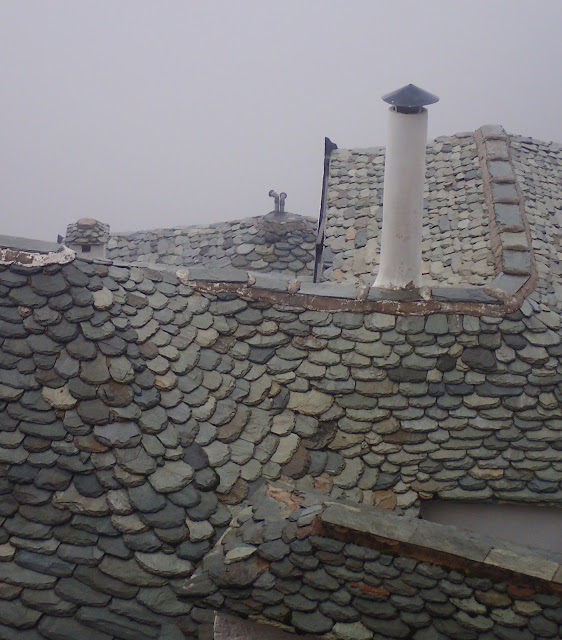
Yes, even in the rain. Portaria is high on a mountain and I have heard the view is outrageous. We really didn't miss it- it was all damp grey romance with those fabulous slate roofs


Dine in front of a roaring fire in a classic Mountain Inn-


At the Kritsa Gastronomy Hotel in the plateia of Portaria, you can taste the best of the region- classic dishes like sausage of wild boar, roast pork in sauce, wild greens with eggs. Refined mountain dining- worth going for the meal alone, and the kindest hostess! The Kritsa Gastronomy Hotel is a destination in itself.
Eleni Karaiskou, our hostess at Kritsa, and her fantastic chef
We experienced all of these things thanks to the great planning of John Grigoras of Spyrou Philoxenia, who arranged our bloggers trip. We stayed at the Aglaida Apartments- traditional architecture and fabulous views!


From Mama Mia beach to a snowy peak- the Ultimate Greek Weekend.


Where is Drinking elevated to a form of art? Drinking Tsipouro in Volos.
Read More »

Friday, February 5, 2016

Stuffed Cabbage Rolls with Velvety Avgolemono Sauce


The Greek version of this warming winter dish has an elegant, velvety sauce- avgolemono ("egg-lemon"). As cabbage dishes go, it's pretty fancy. As fancy dishes go, it's pretty easy. Other virtues? It makes a lot, and, being mainly cabbage and rice, it makes a lot for rather little money. It keeps well, and I've never met anyone who really doesn't like it. It is delicious, if a little less hearty, as a vegetarian dish.

Most stuffed cabbage dishes involve boiling a cabbage to soften the leaves, and truthfully so does this one. I prefer using pickles cabbage leaves- it saves a lot of wet mess, and adds a tang that balances the richness of the meat and the velvety sauce. 

We will need:

1 large fresh or pickled cabbage, or two jars of pickled cabbage leaves (available in stores that sell Russian and Eastern European foods)
1 big bunch of dill
1 big bunch of parsley
1 bunch scallions, or one large onion, or both
2 carrots
500 g/ 1 pound ground beef
2 C short grain rice
black pepper
1 or 2 tsp. salt. (If  you are using a fresh cabbage, use 3 tsp.)
About 120 ml/1/2 C olive oil

Note: for a vegetarian version, skip the meat and add another carrot or two, a potato, a half of a fennel bulb- anything to give flavor and bulk- the potato makes a nice texture. Pulse these along with the herbs

For the sauce:

60 g/ 2 oz butter
60 g/ 1/2 C flour
2 lemons
2 eggs

If you are using a fresh cabbage, boil an enormous pot of water. Core the cabbage, cook it a little, peel off some outer leaves, and boil again to soften the inner leaves. Drain them all. You can cut the enormous ones in half. Save the water.

Take the fronds from the dill stems, the leaves from the parsley, the peeled onion or scallions, the peeled carrots, and put them in the food processor, pulsing until fairly fine. Blend this with the meat and the rice, add the oil and a generous amount of fresh ground pepper, and some salt.


The mixture holds together nicely if you are using meat, and makes these a snap to roll. Also, if you are using pickled cabbage leaves from a jar,they are already rolled and have a perfect shape for making a tight bundle.Put a couple of large spoonfuls of the rice mixture at one end, fold in the edges, and make a tidy, snug roll. It is easier than rolling up grape leaves. These will also be larger than grape leaves- perhaps three times as large. 


Tale a large pot and place the rolls in, fitting them snugly but not tight. 


Try to have them in as flat a layer as possible on top, and cover them completely with a the cabbage water or fresh water and some of the pickling brine from the jar. Put a plate or a lid from a smaller pot on the rolls to hold them in place. The liquid should cover the plate or lid as well. Cover the pot with its own lid, and put on medium low heat. After about a half an hour, check for water and keep checking- they absorb a lot and we want to end up with plenty of leftover liquid for the sauce.

A cousin says hers are ready in about 45 minutes. Mine take over an hour and a half, slowly. Take one out and cut into it, making sure the rice is tender through to the middle. You will see that the filling with the rice will have expanded, making for full, tight rolls.

The hardest part is pouring off the broth- it is a heavy pot, filled with now quite heavy rolls, You may need a hand-someone to hold them in place with the plate while someone else pours off the broth into a bowl. There should be 3 or 4 cups  of liquid. Top it up with water or broth if you need to.

The sauce:

Melt the butter in a saucepan, add the flour, and stir over medium heat until the paste loosens and sounds drier. The roux may take on some golden color. Add the broth all at once, whisking all the while, and keep whisking gently as it thickens and comes to a boil. Remove the pan from the heat.

Juice the lemons, beat the eggs, and add most of the juice. Very slowly, stirring all the while, add the hot sauce in spoonfuls  to the egg/lemon mixture. Keep adding until you have incorporated almost half of the sauce, by which time it will have come slowly up to temperature. Add it back to the sauce in the pan, now off the heat. It may look like you have a lot of sauce. It's never too much. The sauce looks and tastes like tangy lemony rich velvet. 

Serve the hot or warm, with the sauce, and with feta cheese.


Read More »

Tuesday, January 19, 2016

Bliss Springs Eternal- a Classic Spa Weekend at Thermae Sylla

At this classic Spa in Evia's loveliest corner,
I experienced the beauty of Winter in Greece- perhaps its (secret) best season.
Two mellifluous onomatopoeiac words in Greek have no English equivalent: θρόισμα (throisma)- the rustling of the wind through dry leaves, and φλοίσβος (phleisvos)- the sound of pebbles dragged rhythmically back and forth by a gentle tide lapping the beach. Greek is a language of poets, and winter is their season- the contemplative beauty of bare branches is finally revealed; the light is more golden, the shadows longer, and sunsets are positively baroque. The occasional high winds are full of drama. Blinding sun softens, beach bars fall silent, and most visitors are back home again. What is left is the very essence of Greece- naked and beautiful.


Winter is the perfect time to soak this essence up. Literally. Burgeoning to the earth's surface from a depth of three kilometers, somewhere beneath the Thermae Sylla Spa, is some of Europe's finest (in the top three!) therapeutic water. It's so hot- 85 C/185 F- you could make a coddled egg, and it is rich with, apparently, every essential thing. There is a compelling chemical analysis* (see below) of the water's superb properties; my subjective analysis is based on the more compelling fact that my skin is now so soft and so radiant I am not sure I could legally buy a bottle of vodka.


The Spa in Edipsos, Evia, has tamed these (magical?) waters and been using them to heal body and soul for 120 years of health, and a little glamour- (whose bodies? Omar Sharriff's, Greta Garbo's, Winston Churchill's, and of course Maria Callas' for a start). Some friends and I - the members of Travel Bloggers Greece- got to join this list: we were hosted with great warmth by the spa for our one year anniversary, to see- or rather feel- the wonder of natural therapeutic waters. Voula Karatziou – Anastasopoulou and the kindest staff ever made us feel as cossetted and pampered as the waters themselves did. It wasn't the standard professionalism and courtesy that a five star experience offers; this was something more. The reason we felt so truly like guests is because they- as Voula shared with me- feel truly like a family. The management, the staff, the guests, the history, the beautiful location, and of course the great waters flowing up from deep in the earth- all part of one long, grand tradition. We were delighted to become a part of the tradition ourselves- it's an experience that stays with you.

What is the definition of luxury? Perhaps when all the elements of an experience are at their very zenith. By that measure, I had the ne plus ultra of night swims. We were in the midst of a windstorm big enough to be reported on BBC world. Night had fallen. A bright half-moon was soon covered by black clouds and rain started to fall in fat drops. I braved the elements from the 28 - 32 C degree warmth of the outdoor "pool" (the word doesn't feel large enough to describe something this fanciful and enormous):

See those three tiny specks in the middle of the pool? Those are bathers.
The water is half thermal waters, and half sea water. Hot water pumps up from a grate right between these two palm trees. I swam all over the enormous pool, then floated there- the warmth of the thermal waters caressing my back, cold wind howling, rain pelting my face. I would have fallen ravenous on a pack of saltines after a swim like that. But I didn't have to- it was fillet of fresh dorade at our festive one-year anniversary dinner, and the best chocolate cake anyone has ever eaten.

Thermae Sylla is a spa in the classic sense- offering not just luxurious and soul-soothing beauty treatments as many so-called spas do, but therapies, under the guidance of an in-house doctor, often prescribed by the guest's doctor at home. These latter are carried out in a well-appointed medical environment that inspires confidence. The aesthetic and relaxation treatments have their own various plush oases:

Relaxing with the sweet smell of warmed fresh hay in the Rasul salon.

4 different muds are slathered over the body for a Moroccan "Rasul" treatment-
this exotic tiled room with heated seats is where you let them go to work.


The Spa is easy to find- buses service Edipsos from Athens (just a couple of hours) and Thessaloniki (longer- with luscious scenery, and if you are lucky some sheep)-


Both trips include a short ferry ride (2,40 for my fare, plus another 2 for a cappuccino), adding a little of the romance of Greek travel to the journey-


*The waters are rich in potassium, sodium, lithium, amonium, calcium, magnesium, aluminum, chlorine, bromium, iodine, sulfuric ion, hydrophosphoric ion, hydrocarbonate ion. The spa has detailed information about the quantities of each mineral. The waters are odorless but for a pleasant faint tang of mineral health, and salty on the lips. The  water- pure and clear- has some body to it, a palpable softness. I did not shower, but just used the the shower head to wash my hair- you simply don't want to rinse it from your skin. We are having a cold winter, but you will not need any lotion or oil- your skin will be plump and lush and silky from the waters themselves.

Travel Bloggers Greece were guests of Thermae Sylla Spa- the kindest of hosts. Thank you to them, and to Travel Bloggers Greece for arranging this festive weekend!

Read More »

Wednesday, December 9, 2015

Athens in Winter is all Charm and Grace, and Surprises.


Summer is the sun around which the rest of the year revolves, and fall- otherwise the season of newness and anticipation (shopping for notebooks, the smell of pencil shavings), is here in Greece simply the thing that comes after the "good weather;" The Greek word for "summer" is "καλο(good)καιρι(weather)" ("Kalokairy- accent on the third syllable); winter holds no good in its definition. But it is good- very, very good, filled with moody, subtle pleasures. Athens gets all plush muted gray like Paris does in the winter. It's a respite- none of that trying "penetrating" and "expanding" that so beguiled Henry Miller. You can take in every dreamy detail at your leisure; Miller's light of Greece hides as much as it reveals. Winter in Athens is very three dimensional, rich with detail, and all the time in the world to enjoy it.

Here is an Athens winter day, unplanned, unfolding by chance. They're all like this- perfect in their own way:

True, the Acropolis museum is spectacular- content, location, structure- all spectacular. But the Archaeological Museum smells better, has a great classic layout of endless grand rooms, and is jammed with riches- jammed. You cannot make a wrong turn with each thing more breathtaking than the last.

Double fun!
 This 2nd C AD Aphroditi was partially
 restored by Canova.

Or, more entertaining than the last:

Aphroditi again- her left foot is bare-
that's her slipper in her hand that she's about to smack Pan with.
the museum is at the edge of Exarchia, the neighborhood of riots, teargas, musical instrument sellers and restorers, publishing houses, and book binders- not always in that order. Also the neighborhood of grafiti art and incredible murals:
Scale-  One story tall-
the ants are about the size of a three year old.
Some things worth looking at are quite small, and you'd miss them in the blinding sun. Like the window of this book restorer:


"Artistic bookbinders- I. N. Mantzakos"
A magnificent little slice of a much earlier century, not much wider than one's outstretched arms. Blink and you would have missed it, as they say, and blink you would in the summer sun. Winter is full of these surprises.

The main shopping street, Ermou, is just that- wide and long and lined with international chain shops and full of shoppers. Every city has one. But right at a main intersection there is this guy:


selling salepi from his magnificent samovar, which is how you know you are not in Arizona. Salepi is a warm, slightly viscous drink, made from the powdered root of a wild orchid. I would not buy a warm viscous drink from a street vendor in a million years so I cannot tell you how it tastes, but I hear it is delicious. The salepi vendor is just a short distance from the Metropolitan Cathedral- itself under renovation. Next to it is an older Church- a more intimate choice for lighting a candle:


And next to this is Philothei street- which I discovered by accident in the heat of August 2 years ago and now visit regularly. This street is where the church shops- not household religious articles like icons and home altars, but serious stuff- Sceptres, Crowns (!), pigments for icon painters, bishops hats wrapped in white paper and lined up on glass shelves like panettone, and unbelievable textile shops. There is a hushed atmosphere that makes you feel like you are probably not supposed to be here, which makes it more interesting than it already would be.


These are not for the layperson- 
they are about the size of a hand.
Between this street of eerie calm and the serene grand promenade Aeropagitou is Plaka. It's not so big, and you can get a couple of postcards. Before you know it you are in front of the Acropolis museum, between going in or wandering aimlessly, and decide to wander aimlessly. Athens looks a little like Vienna from some angles in the soft wintery light:

Right behind Aeropagitou is the quiet street Kalisperi, with a perfect cafe. We stopped for an ouzo- the color of the sky:


And this was the view:


Through the bare branches can you just make out the Irodeio?  

More casual Athens pleasures-


Mysterious, enchanting Agiou Philothei street


Drinking Chai on Evripidou


A weekend of Picasso and Pastis
Read More »

Wednesday, February 4, 2015

Athens in Winter is all Charm and Grace.


Summer is the sun around which the rest of the year revolves, and fall- otherwise the season of newness and anticipation (shopping for notebooks, the smell of pencil shavings), is here in Greece simply the thing that comes after the "good weather;" The Greek word for "summer" is "καλο(good)καιρι(weather)" ("Kalokairy- accent on the third syllable); winter holds no good in its definition. But it is good- very, very good, filled with moody, subtle pleasures. Athens gets all plush muted gray like Paris does in the winter. It's a respite- none of that trying "penetrating" and "expanding" that so beguiled Henry Miller. You can take in every dreamy detail at your leisure; Miller's light of Greece hides as much as it reveals. Winter in Athens is very three dimensional, rich with detail, and all the time in the world to enjoy it.

Here is an Athens winter day, unplanned, unfolding by chance. They're all like this- perfect in their own way:

True, the Acropolis museum is spectacular- content, location, structure- all spectacular. But the Archaeological Museum smells better, has a great classic layout of endless grand rooms, and is jammed with riches- jammed. You cannot make a wrong turn with each thing more breathtaking than the last.

Double fun!
 This 2nd C AD Aphroditi was partially
 restored by Canova.

Or, more entertaining than the last:

Aphroditi again- her left foot is bare-
that's her slipper in her hand that she's about to smack Pan with.
the museum is at the edge of Exarchia, the neighborhood of riots, teargas, musical instrument sellers and restorers, publishing houses, and book binders- not always in that order. Also the neighborhood of grafiti art and incredible murals:
Scale-  One story tall-
the ants are about the size of a three year old.
Some things worth looking at are quite small, and you'd miss them in the blinding sun. Like the window of this book restorer:


"Artistic bookbinders- I. N. Mantzakos"
A magnificent little slice of a much earlier century, not much wider than one's outstretched arms. Blink and you would have missed it, as they say, and blink you would in the summer sun. Winter is full of these surprises.

The main shopping street, Ermou, is just that- wide and long and lined with international chain shops and full of shoppers. Every city has one. But right at a main intersection there is this guy:


selling salepi from his magnificent samovar, which is how you know you are not in Arizona. Salepi is a warm, slightly viscous drink, made from the powdered root of a wild orchid. I would not buy a warm viscous drink from a street vendor in a million years so I cannot tell you how it tastes, but I hear it is delicious. The salepi vendor is just a short distance from the Metropolitan Cathedral- itself under renovation. Next to it is an older Church- a more intimate choice for lighting a candle:


And next to this is Filothei street- which I discovered by accident in the heat of August 2 years ago and now visit regularly. This street is where the church shops- not household religious articles like icons and home altars, but serious stuff- Sceptres, Crowns (!), pigments for icon painters, bishops hats wrapped in white paper and lined up on glass shelves like panettone, and unbelievable textile shops. There is a hushed atmosphere that makes you feel like you are probably not supposed to be here, which makes it more interesting than it already would be.


These are not for the layperson- 
they are about the size of a hand.
Between this street of eerie calm and the serene grand promenade Aeropagitou is Plaka. It's not so big, and you can get a couple of postcards. Before you know it you are in front of the Acropolis museum, between going in or wandering aimlessly, and decide to wander aimlessly. Athens looks a little like Vienna from some angles in the soft wintery light:


Right behind Aeropagitou is the quiet street Kalisperi, with a perfect cafe. We stopped for an ouzo- the color of the sky:


And this was the view:


Through the bare branches can you just make out the Irodeio?  

Read More »